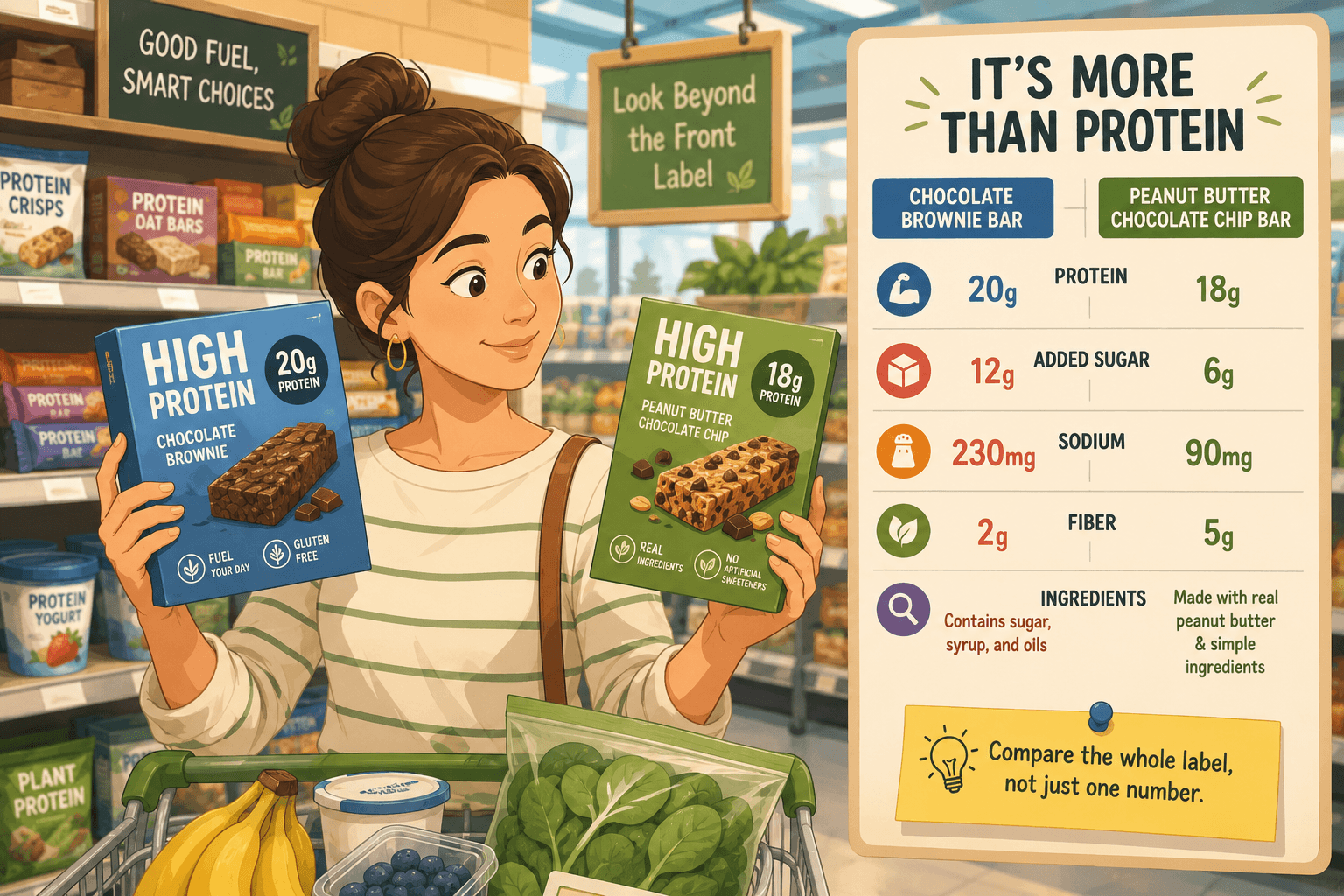
High-Protein Grocery List: What to Look For Beyond the Front Label
High-protein foods are everywhere, but the front label does not tell the whole story. Here is how to compare protein, sugar, sodium, fiber, and ingredients while you shop.
Grocery Savvy Team
The Grocery Savvy team shares practical grocery shopping tips and insights to help everyday food decisions feel clearer and easier.
Published June 16, 2026 • 7 min read
High-protein foods are having a moment.
You see it on yogurt cups, cereal boxes, snack bars, frozen meals, drinks, chips, pasta, pancake mix, and almost every kind of packaged snack.
That can be helpful if protein is something you are trying to pay more attention to. But it can also make grocery shopping more confusing.
Because "high protein" on the front of a package does not automatically tell you whether the food is a useful fit for your grocery list.
It tells you one thing to check.
The better question is: what else comes with that protein?
Start With Protein Per Serving
The Nutrition Facts label lists protein in grams per serving.
That serving-size part matters.
A food may look high in protein until you realize the serving size is larger than you would normally eat. Another product may look modest at first, but be easier to use because the serving size matches how you actually eat it.
Before comparing products, check:
- grams of protein
- serving size
- servings per container
- whether you would realistically eat that serving
If serving size is the part that makes labels feel slippery, Serving Size vs 100g is a good companion read.
Do Not Let Protein Hide the Rest of the Label
Protein is useful, but it is not the whole food.
A product can be higher in protein and still be:
- high in added sugar
- high in sodium
- higher in saturated fat
- lower in fiber
- more processed than you expected
That does not automatically mean the food is "bad." It just means the protein claim should not do all the thinking.
The FDA Nutrition Facts label is designed to help shoppers compare nutrients per serving. For high-protein products, that comparison works best when you look beyond one number.
A Better High-Protein Grocery Checklist
When you are comparing high-protein foods, try this order:
- Check serving size.
- Check grams of protein.
- Check added sugars.
- Check sodium.
- Check saturated fat.
- Check fiber.
- Scan the ingredient list.
You do not need to do this for every food in the store.
It is most useful when the products are similar, like two yogurts, two snack bars, two frozen meals, or two cereals.
High-Protein Grocery Items Worth Comparing
This is not a perfect grocery list for everyone. Your needs, budget, taste, allergies, and medical guidance all matter.
But these are common high-protein categories where label comparison can be especially useful.
Greek Yogurt and Skyr
These can be convenient protein options, but flavored versions may vary a lot in added sugars.
Look at:
- protein per serving
- added sugars
- serving size
- ingredients
Plain versions usually give you more flexibility. Flavored versions can still fit your list, but the label is worth checking.
Cottage Cheese
Cottage cheese can be protein-forward, but sodium can vary by brand and serving size.
If sodium is one of your goals, compare similar containers instead of assuming they are all the same.
Eggs
Eggs are simple to understand compared with many packaged foods. They are also flexible because they can fit breakfast, snacks, salads, bowls, and quick dinners.
The main comparison is usually package size, price, and how you plan to use them.
Beans, Lentils, and Chickpeas
Beans and lentils bring protein, but they also bring fiber and carbohydrates.
For canned versions, sodium is often the label field to compare. "No salt added" or lower-sodium options may be useful if sodium is something you watch.
Tuna, Salmon, Chicken, and Other Packaged Proteins
Shelf-stable proteins can be convenient, especially for quick meals.
Check sodium, serving size, and whether the product is packed with sauces or seasonings that change the nutrition profile.
Tofu, Tempeh, and Meat Alternatives
Plant-based proteins can vary widely.
Some are simple. Others are more heavily processed or higher in sodium. That is where the ingredient list and Nutrition Facts panel matter together.
For more context on processing level, What NOVA Classification Means for Your Grocery Cart is worth reading.
High-Protein Snack Bars
Snack bars are one of the biggest places where front labels can be misleading.
Two bars can both say "high protein" and still look very different once you compare:
- added sugars
- sugar alcohols
- fiber
- saturated fat
- protein source
- ingredient list
If sugar claims are part of the comparison, No Added Sugar vs Low Sugar explains how to read those labels without getting tripped up.
Frozen Meals
Frozen meals can be convenient, and some are higher in protein.
But this is one of the places where sodium can add up quickly. Compare protein with sodium, saturated fat, fiber, and serving size before deciding.
If you want the food-safety side of frozen shopping too, Frozen Food Safety Basics covers how to shop, store, and heat freezer foods more safely.
Watch Out for Protein Halo
Protein halo is the mental shortcut where a product feels better because the front label emphasizes protein.
It can happen with:
- chips
- cookies
- cereal
- ice cream
- drinks
- snack bars
- frozen meals
Again, that does not mean you can never buy those foods.
It just means "high protein" is not the same as "automatically a better choice."
A protein cookie is still a cookie-style product. A protein cereal is still worth checking for added sugars and fiber. A protein frozen meal still needs a sodium check.
Compare Within the Same Category
One of the easiest ways to make protein shopping less stressful is to compare similar products.
Do not compare yogurt to tuna. Do not compare eggs to snack bars. Do not compare tofu to cereal.
Compare:
- yogurt to yogurt
- bar to bar
- frozen meal to frozen meal
- cereal to cereal
- meat alternative to meat alternative
That is where the label becomes much more useful.
When Protein Is Not the Only Goal
Some shoppers are looking for more protein because they want convenient meals. Some are thinking about fitness. Some are trying to build more balanced snacks. Some are following guidance from a healthcare professional.
Those are different situations.
Grocery Savvy can help explain labels and compare products, but it is not medical advice. If protein is part of a medical nutrition plan, use the targets from your clinician or registered dietitian.
For general label literacy, it is usually enough to ask:
- Does this product give me the protein I expected?
- What else comes with it?
- Is there a similar option with a better fit for my goals?
How Grocery Savvy Can Help
High-protein shopping is exactly the kind of comparison problem that can get annoying in real life.
You are not just checking protein. You are checking serving size, added sugar, sodium, fiber, saturated fat, ingredients, and sometimes processing level.
Grocery Savvy is designed to make that easier by helping you review product details and label signals faster while you shop.
It does not replace the package label. Product formulas can change, and the package is always the source of truth.
But when you are choosing between similar products, a clearer comparison can make the decision feel less random.
Final Takeaway
A high-protein label can be useful.
But it should be the start of the label check, not the end.
Look at protein per serving, then check what comes with it: added sugars, sodium, saturated fat, fiber, ingredients, and serving size.
That is how high-protein shopping becomes more practical and a lot less dependent on front-of-package marketing.
Keep Reading
Related Articles
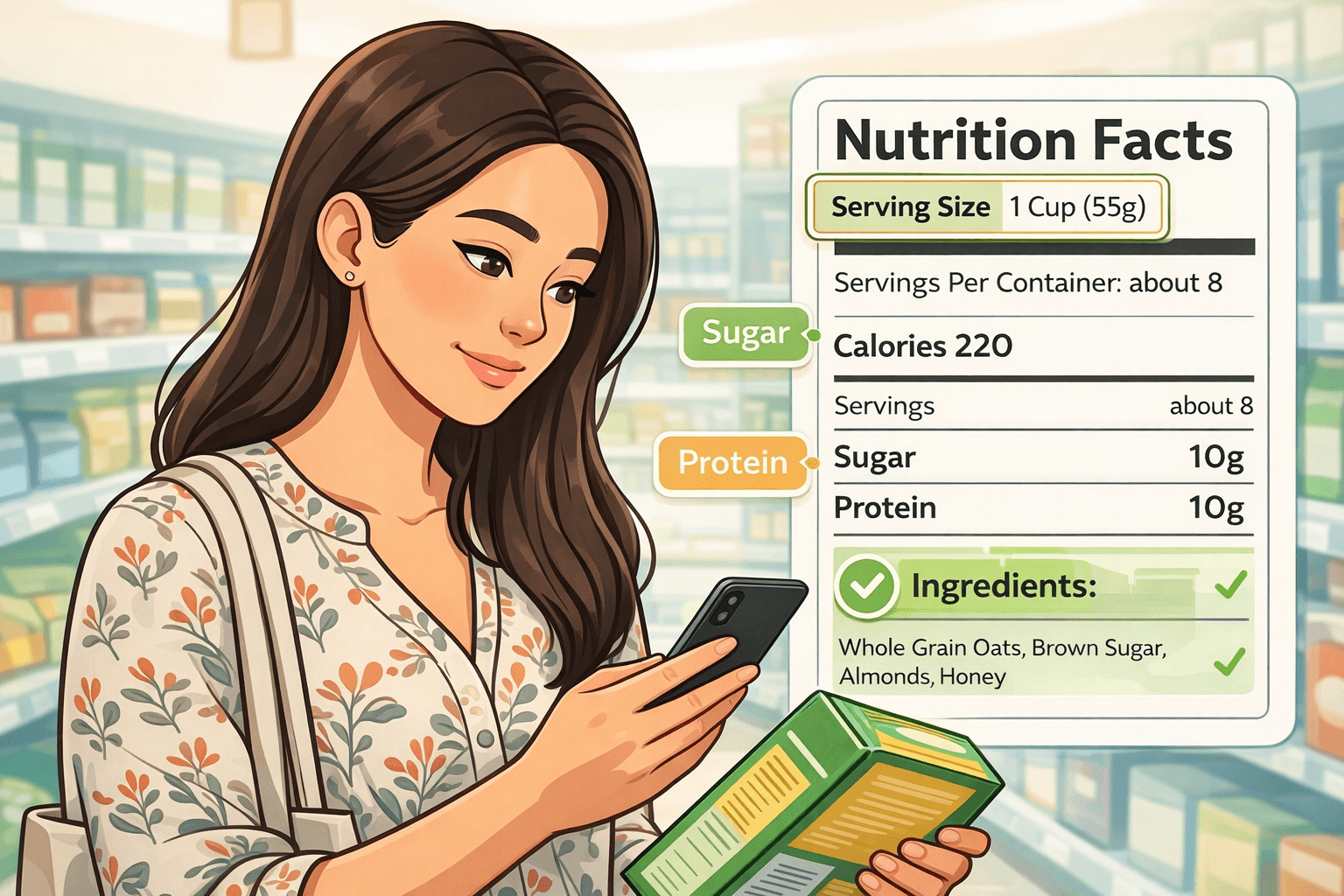
How to Read Nutrition Labels Like a Pro (Even If You Are a Beginner)
Nutrition labels can feel like a wall of numbers when you are new to them. This guide breaks down the parts that matter most so grocery decisions feel more practical.
Read article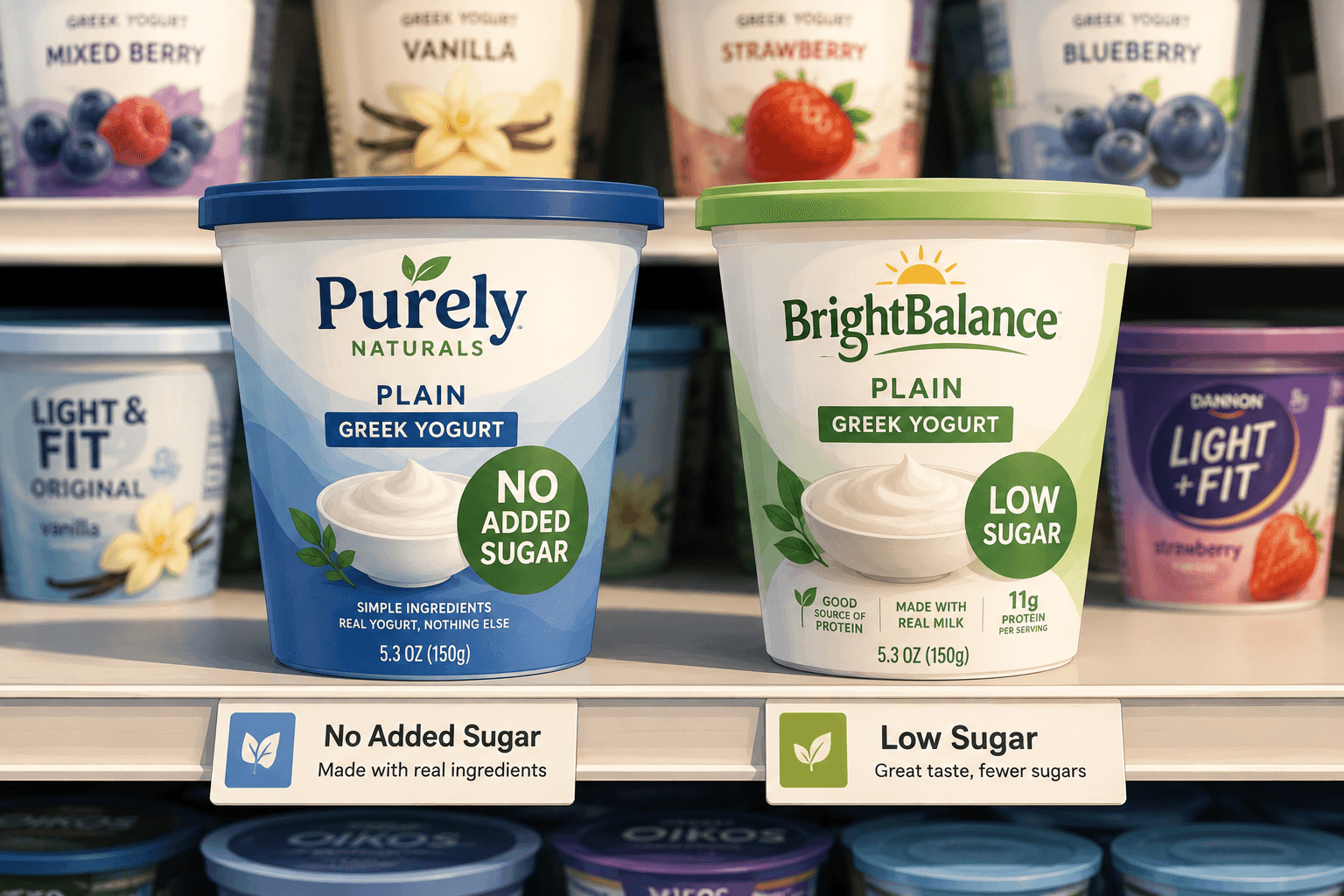
No Added Sugar vs Low Sugar: What Food Labels Actually Mean
No added sugar, low sugar, zero sugar, and total sugars can sound similar on packages. Here is how to read those labels without getting misled.
Read article