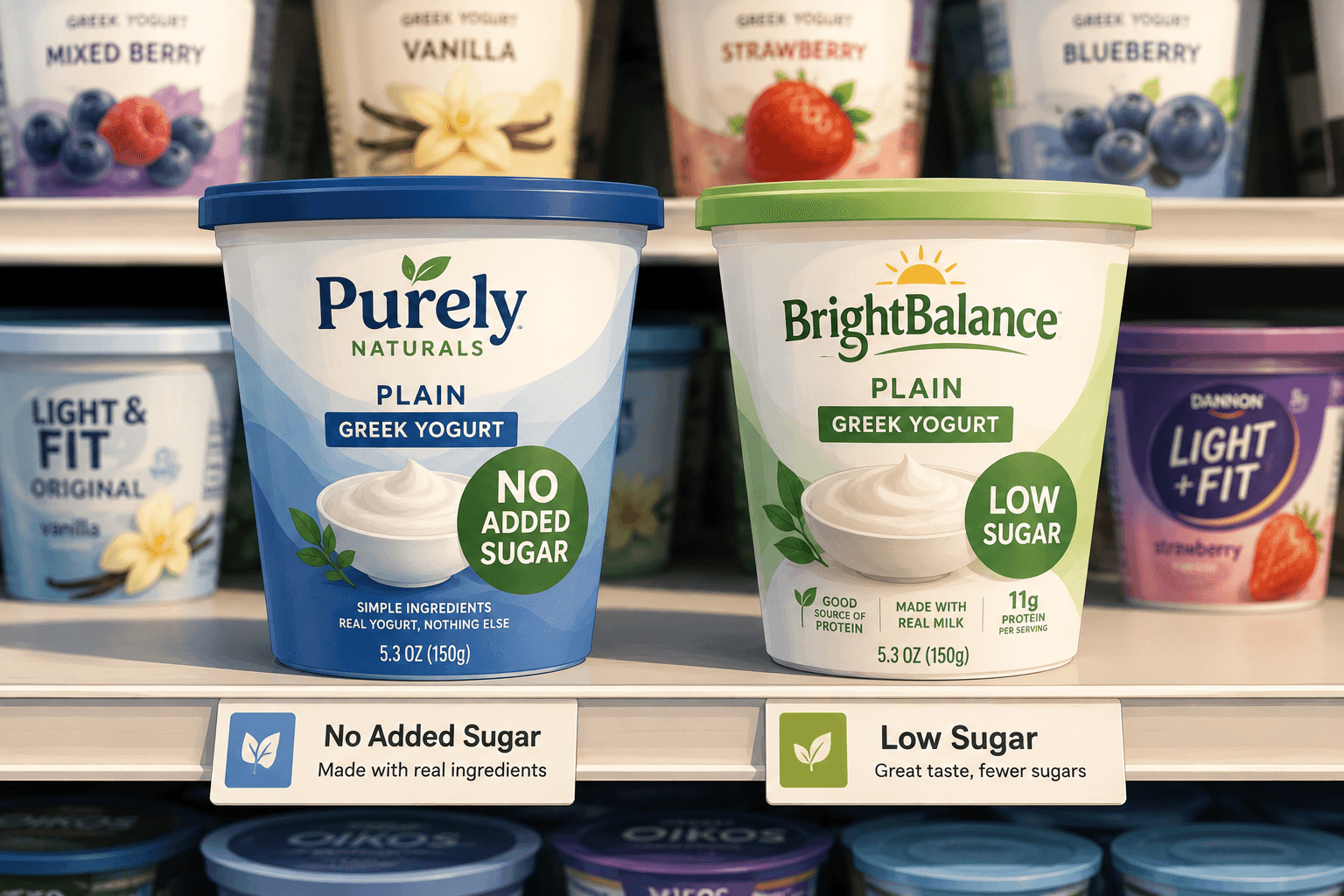
No Added Sugar vs Low Sugar: What Food Labels Actually Mean
No added sugar, low sugar, zero sugar, and total sugars can sound similar on packages. Here is how to read those labels without getting misled.
Grocery Savvy Team
The Grocery Savvy team shares practical grocery shopping tips and insights to help everyday food decisions feel clearer and easier.
Published June 16, 2026 • 7 min read
Sugar labels should be simple.
But in the grocery store, they usually are not.
You might see one product that says "no added sugar," another that says "zero sugar," another that says "low sugar," and another that looks healthy on the front but has more sugar than you expected on the back.
That does not mean you need to avoid every sweet food. It just means the front of the package rarely tells the whole story.
If you know the difference between total sugars, added sugars, and sugar-related claims, it becomes much easier to compare products without overthinking it.
Start With the Nutrition Facts Label
The most useful place to start is not the front of the package.
It is the Nutrition Facts label.
On most packaged foods, you will usually see:
- total sugars
- added sugars
- percent Daily Value for added sugars
Those lines are related, but they do not mean the same thing.
The FDA explains added sugars on the Nutrition Facts label as part of the broader sugar information shown on packaged foods. Total sugars include sugars naturally present in ingredients like fruit or milk, plus any sugars added during processing or preparation.
Added sugars are listed separately because they show how much sugar was added to the product. They are already included within total sugars.
That last part matters.
If a label says:
- Total Sugars: 12g
- Includes 8g Added Sugars
that does not mean the product has 20 grams of sugar. It means 8 of the 12 grams are added sugars.
What "No Added Sugar" Means
"No added sugar" usually means sugar was not added during processing or preparation.
That can be useful, but it does not mean the food has no sugar.
A product can have no added sugar and still contain sugar naturally present in ingredients like:
- fruit
- milk
- yogurt
- tomato products
For example, plain unsweetened yogurt can contain total sugars because milk naturally contains lactose. A fruit product can contain total sugars because fruit naturally contains sugar.
That is why "no added sugar" is a helpful clue, not the final answer.
You still want to check:
- serving size
- total sugars
- added sugars
- ingredients
- whether the product uses non-sugar sweeteners
What "Low Sugar" Means
"Low sugar" sounds straightforward, but shoppers should be careful with it.
Some sugar-related wording is regulated in specific ways, and some wording can feel more like marketing depending on how it appears. The FDA's overview of food label claims is a useful reminder that front-of-package language should be checked against the Nutrition Facts panel.
Instead of stopping at the front label, compare:
- grams of total sugar per serving
- grams of added sugar per serving
- percent Daily Value for added sugars
- serving size
- similar products on the shelf
This is where a product comparison helps more than a single number.
A cereal with 6 grams of added sugar might look different when the serving size is smaller than the cereal next to it. A snack bar may look "lower sugar" compared with one bar, but not compared with a different style of snack.
Labels make more sense when you compare similar foods.
What "Zero Sugar" Means
"Zero sugar" usually points to the amount of sugar listed for the labeled serving.
But it still helps to look at the rest of the package.
A zero-sugar product may use:
- sugar alcohols
- high-intensity sweeteners
- other ingredients that affect taste, texture, or calories
That does not automatically make the product good or bad. It just means the sugar claim is only one piece of information.
If you are comparing drinks, yogurts, bars, cereals, sauces, or desserts, it is worth checking the ingredient list too.
Why Serving Size Changes the Whole Picture
Sugar numbers are based on serving size.
That sounds obvious until you are holding a package that looks like one snack but lists two or three servings.
If you eat more than the listed serving, the sugar and added sugar amounts go up with the amount eaten.
This is one of the most common ways labels become confusing.
Before deciding whether a sugar number feels high or low, check:
- how much the serving size is
- how many servings are in the package
- whether you would realistically eat one serving
If serving size is the part that trips you up, Serving Size vs 100g is a helpful next read.
Use Percent Daily Value for Added Sugars
The FDA's percent Daily Value guidance can make added sugars easier to interpret.
For nutrients with a percent Daily Value, FDA label education uses this simple guide:
- 5% Daily Value or less per serving is low
- 20% Daily Value or more per serving is high
Added sugars have a percent Daily Value on the Nutrition Facts label.
That makes %DV useful when you are comparing similar products, especially if grams alone do not mean much to you in the aisle.
For example, two products might both sound reasonable until you notice one has a much higher %DV for added sugars per serving.
That does not mean you can never buy it. It means you have better context.
Watch for Sugar in the Ingredient List
The Nutrition Facts panel tells you the amount.
The ingredient list tells you where it may be coming from.
Added sugars can appear under many ingredient names, including:
- sugar
- cane sugar
- brown sugar
- corn syrup
- dextrose
- sucrose
- honey
- maple syrup
- molasses
- fruit juice concentrate
You do not need to memorize every possible sugar name.
A practical shortcut is to look at the first few ingredients. Ingredients are listed by weight, so the first ingredients usually make up more of the product than ingredients near the end.
If a sweetener appears near the beginning, that is useful context.
For a broader walkthrough, How to Read Food Labels Without Overthinking It goes deeper into ingredient lists.
Common Grocery Examples
This comes up often in everyday products.
Yogurt
Plain yogurt may have total sugars from milk, even when it has no added sugar.
Flavored yogurt may have both naturally occurring milk sugar and added sugar.
Cereal
Cereal claims can be tricky because the front of the box may focus on whole grains, vitamins, protein, or fiber.
Those details can matter, but added sugars and serving size still deserve a look.
Sauces and Condiments
Ketchup, barbecue sauce, pasta sauce, salad dressings, and marinades can all contain added sugars.
The serving size may also be small, so compare similar products if sugar is one of your goals.
Snack Bars
Snack bars can vary a lot. Some rely on fruit, some use syrups, some use sugar alcohols, and some use a mix.
Checking total sugars, added sugars, fiber, protein, and ingredients gives a clearer picture than the front label alone.
A Simple Sugar Label Checklist
When you are choosing between similar products, try this:
- Check serving size first.
- Look at total sugars.
- Look at added sugars.
- Use %DV for added sugars.
- Scan the first few ingredients.
- Compare with a similar product.
You do not need to do this for every single food you buy.
It is most useful when you are deciding between products that serve the same purpose, like two yogurts, two cereals, two sauces, or two snack bars.
How Grocery Savvy Can Help
Sugar labels are a perfect example of why grocery decisions can feel harder than they should.
The label gives you data, but you still have to interpret it while standing in the aisle.
Grocery Savvy is designed to make that comparison faster by helping you review product details, ingredient context, and label signals in one place.
It is not medical advice, and it does not replace the package label. Product formulas can change, so the package should always be your source of truth.
But when you are trying to compare similar foods quickly, Grocery Savvy can help make the label easier to use.
Final Takeaway
"No added sugar" does not mean sugar-free.
"Zero sugar" does not tell you everything about the product.
"Low sugar" should still be checked against the Nutrition Facts label.
The best habit is simple: use the front label as a clue, then confirm it with serving size, total sugars, added sugars, %DV, and the ingredient list.
That gives you a clearer, calmer way to shop without turning every grocery trip into homework.
Keep Reading
Related Articles
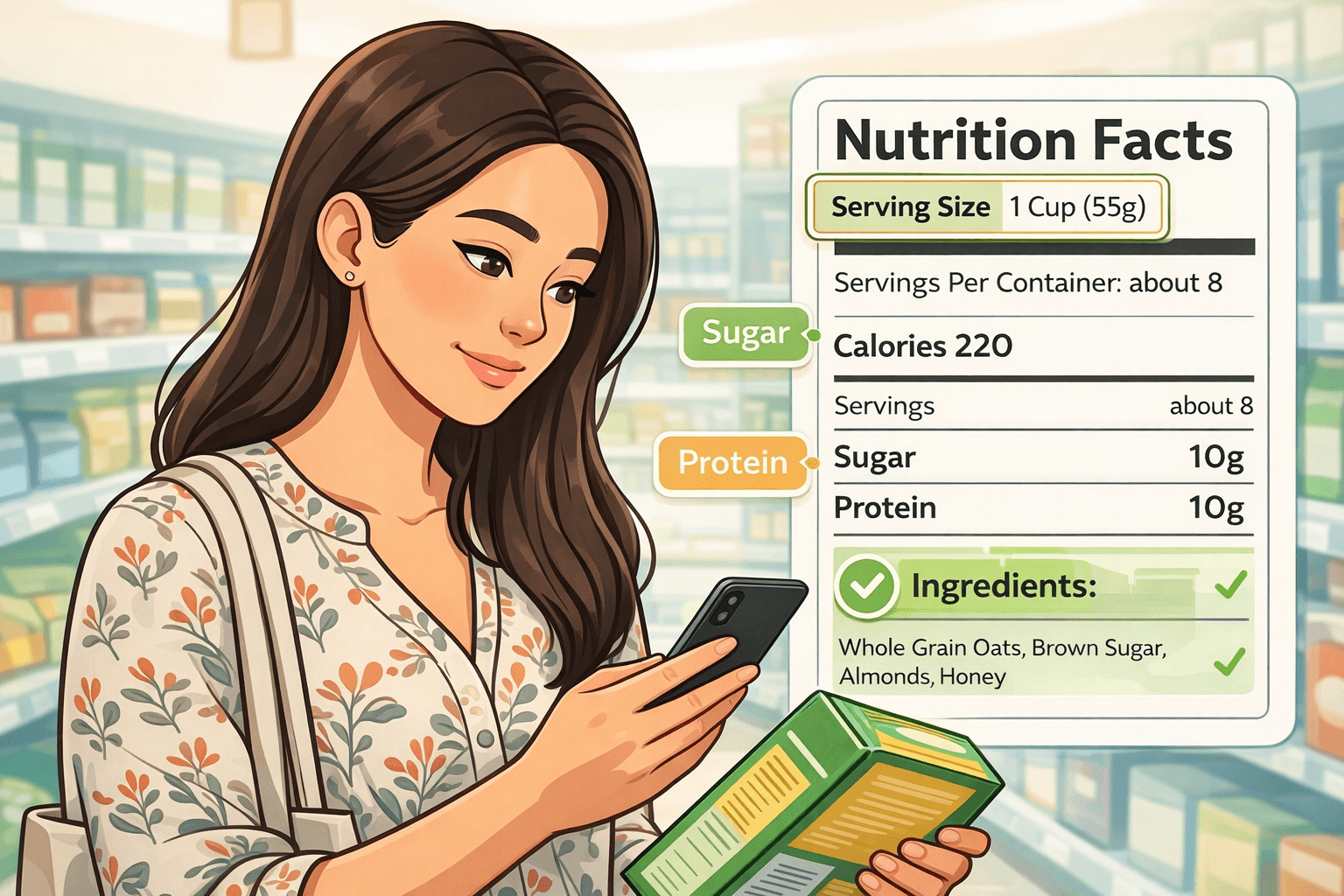
How to Read Nutrition Labels Like a Pro (Even If You Are a Beginner)
Nutrition labels can feel like a wall of numbers when you are new to them. This guide breaks down the parts that matter most so grocery decisions feel more practical.
Read article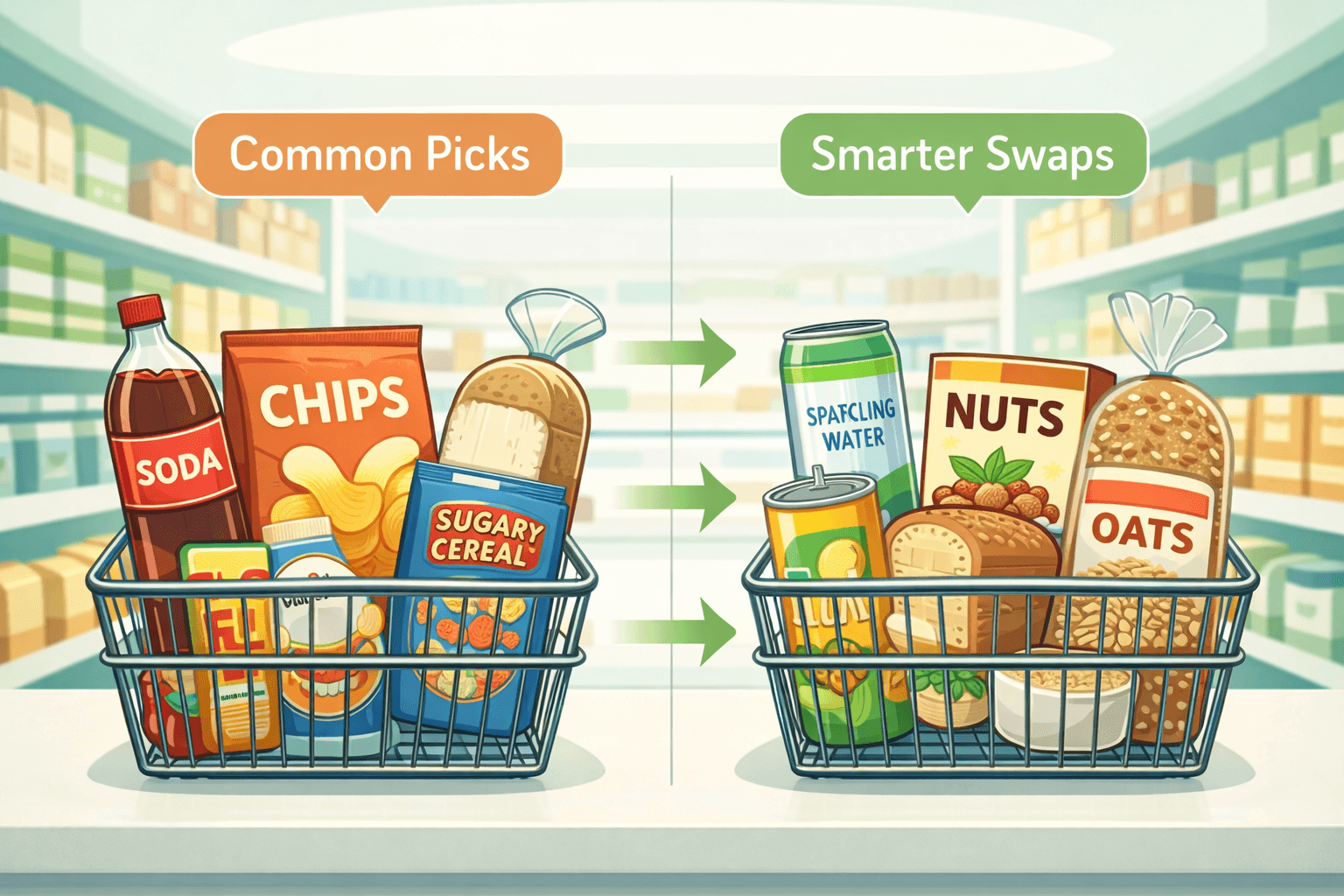
Healthy Eating Made Simple: 10 Easy Swaps for a Healthier Grocery List
Healthier grocery shopping does not have to start with a full reset. These simple swaps can make everyday meals feel more balanced without adding a lot of friction.
Read article