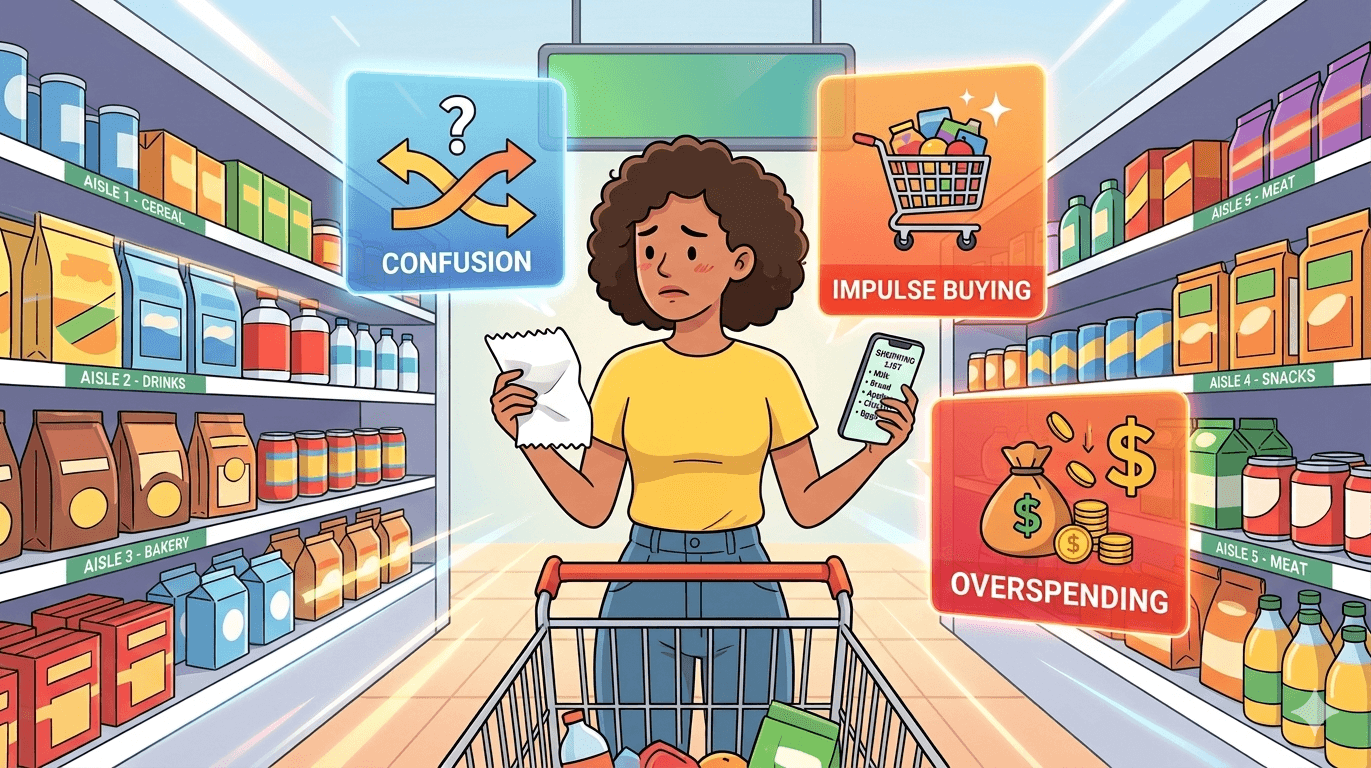
Common Grocery Shopping Mistakes That Cost You Time and Money
Small grocery shopping mistakes can quietly waste time, money, and energy. These are some of the most common habits that make grocery trips harder than they need to be.

Grocery Savvy Team
The Grocery Savvy team shares practical grocery shopping tips and insights to help everyday food decisions feel clearer and easier.
Published January 17, 2026 • 6 min read
Grocery shopping sounds simple on paper, but small mistakes can quietly add up. Buying things you do not need, forgetting key ingredients, or getting pulled off track by promotions can cost you time, money, and a lot of unnecessary frustration.
The good news is that most of these habits are easy to fix once you notice them. A little planning and a little more awareness can make grocery trips feel much more manageable.
1. Skipping Meal Planning
One of the easiest ways to make grocery shopping harder is to walk in without any plan for what you are going to eat.
Without a plan, it is much easier to:
- grab whatever looks convenient
- buy random extras that do not work together
- end up with food you never use
Meal planning does not have to be complicated. Even a rough outline for breakfasts, lunches, dinners, and snacks helps you shop with more direction.
If you want a more realistic starting point, Grocery Savvy can help you organize your shopping flow around the meals and ingredients you actually expect to use.
2. Shopping Without a List
Walking into a grocery store without a list almost guarantees one of two outcomes:
- impulse buys
- forgotten essentials
A list gives your trip structure. It also keeps you from relying on memory when you are tired, distracted, or in a hurry.
It helps even more when your list is organized by store sections like produce, pantry, proteins, dairy, and frozen foods. That keeps the trip moving in one direction instead of turning into constant backtracking.
If list-building is one of your weak spots, our grocery list docs show how Grocery Savvy handles it in a more practical way.
3. Falling for Promotions and Discounts
Sales are useful when they match what you actually need. They are expensive when they do not.
It is easy to see a discount and assume you are saving money, but that only helps if:
- you were already planning to buy it
- you will actually use it
- it will not expire before you get to it
A better habit is to compare unit prices and ask whether the deal fits your meal plan or pantry needs. If not, it may just be clutter in disguise.
4. Buying Too Many Perishables
Stocking up on fresh produce, dairy, or meat can feel smart in the moment, but it can become waste very quickly if you buy more than you can realistically use.
That usually leads to:
- spoiled food
- wasted money
- guilt the next time you open the fridge
Buying perishables more intentionally does not mean buying too little. It just means matching your cart to your actual week, not your ideal week.
If this is where your grocery budget tends to fall apart, How to Eat Well on a Tight Grocery Budget goes deeper on the cost side of the equation.
5. Ignoring Pantry Staples
Many shoppers spend too much time thinking about convenience foods and not enough time thinking about the staples that make meal-building easier.
Useful pantry basics include:
- rice
- oats
- pasta
- canned beans
- lentils
These foods are flexible, affordable, and easy to build around. When you keep them on hand, it becomes much easier to pull together meals without another store trip.
6. Trying To Keep Everything in Your Head
When you are mentally tracking what is in your kitchen, what you need, what meals you might make, and what you should not forget, mistakes are almost guaranteed.
That is one reason even a simple grocery tool can help. Grocery Savvy is built to reduce that mental overhead by helping you organize grocery lists, review foods, and make decisions with more clarity.
If you are new to the app, you can get the broader overview on What is Grocery Savvy?.
7. Shopping Hungry or Distracted
This one is common because it feels harmless.
But shopping while hungry or distracted usually means:
- more impulse purchases
- more snack-heavy decisions
- less attention to price and fit
Even a small snack before you go can make a noticeable difference. So can taking a few extra minutes to slow down and shop with a little more intention.
8. Forgetting To Check What You Already Have
Buying duplicates is one of the easiest ways to waste money.
It usually happens because people skip checking:
- the pantry
- the fridge
- the freezer
Taking just a few minutes to see what is already at home helps you avoid buying things twice and makes it easier to plan meals around what you already have.
9. Overlooking Freezer and Storage Options
Good storage habits can stretch your grocery budget more than people realize.
Freezing leftovers, extra portions, or ingredients you will not use right away can help you:
- reduce waste
- keep more food usable for longer
- get more value from what you already bought
Storage is one of those small habits that feels minor until you notice how much less food you are throwing away.
10. Rushing Through the Store
Rushing may feel efficient, but it often creates the exact mistakes that force another trip later.
When you move too quickly, you are more likely to:
- miss ingredients
- grab the first option instead of the better one
- forget to compare sizes or prices
You do not need to turn grocery shopping into a long event. But slowing down just enough to make intentional choices often saves time in the bigger picture.
11. Not Comparing Prices and Options
The first item you see is not always the best fit.
Comparing:
- brands
- package sizes
- unit prices
can make a bigger difference than people expect, especially for the things you buy often.
This is one of the easiest habits to build because it only takes a few extra seconds, but it adds up over time.
12. Ignoring Expiration or Best-By Dates
It is easy to toss something into the cart and move on without checking the date, especially when you are shopping quickly.
But on perishables, that can mean:
- less time to use the food
- more spoilage
- more waste
Checking dates is a simple way to protect both your budget and your kitchen routine.
Final Takeaway
Most grocery shopping mistakes are not dramatic. They are small habits that quietly make shopping more expensive, more stressful, or less efficient than it needs to be.
The encouraging part is that small fixes go a long way too.
Meal planning a little more, checking what you already have, comparing options, using better list habits, and slowing down just enough to shop intentionally can make grocery trips feel much easier over time.
You do not need a perfect system. You just need a few habits that help you shop with more clarity and consistency.
If you want to keep building from there, Building Better Grocery Habits Over Time is a natural next step.
Keep Reading
Related Articles
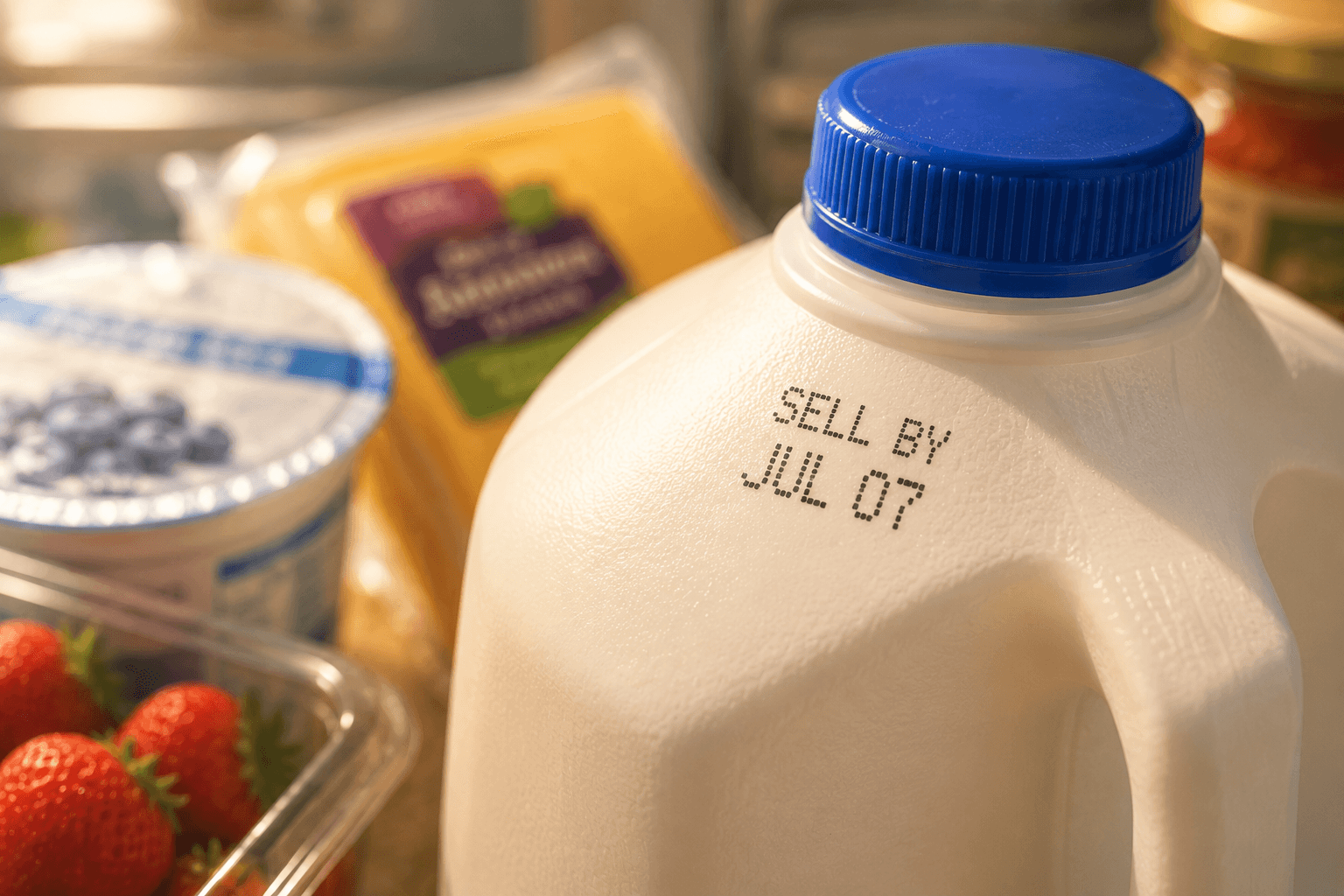
California Banned “Sell By” Dates: What Grocery Shoppers Should Know
California’s new food date label law is a good reminder that “sell by,” “best if used by,” and “use by” do not all mean the same thing. Here is how to read date labels without wasting food or ignoring safety.
Read article
Takis Removing Artificial Colors and TBHQ: What Snack Labels Actually Tell You
Reports that Takis will remove artificial colors and TBHQ are a good reminder to read snack labels with context. Here is what synthetic dyes, TBHQ, and reformulation news actually mean when you shop.
Read article