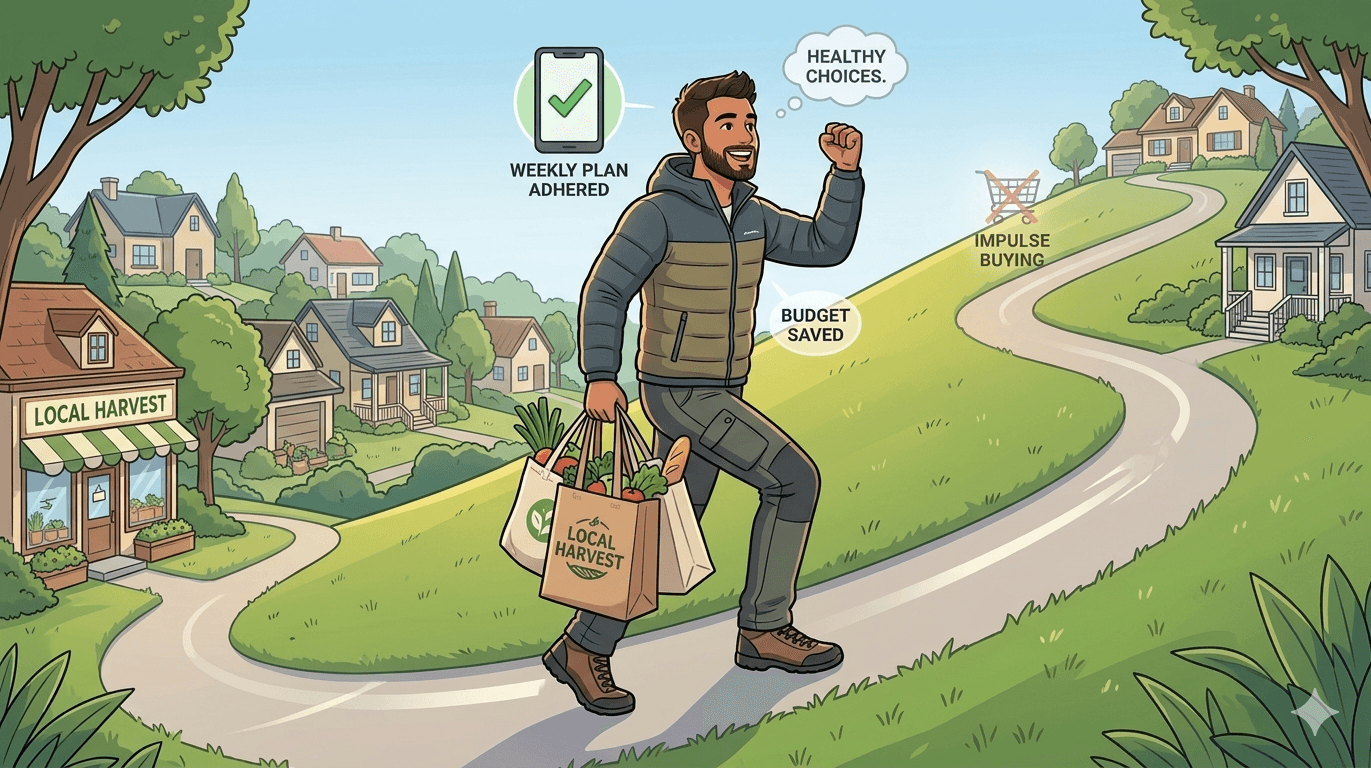
Building Better Grocery Habits Over Time (Without Changing Everything At Once)
Better grocery habits usually come from small, steady changes rather than a full reset. These practical shifts can make shopping feel calmer, more intentional, and easier to maintain.

Russell Giles Jr.
The founder of Grocery Savvy. He writes about grocery shopping habits, food decision-making, and building simple systems that help people shop with more confidence and less overwhelm.
Published December 23, 2025 • 6 min read
Grocery shopping can feel overwhelming, especially when you are trying to make more thoughtful choices. It is easy to fall into familiar routines, grab what is convenient, or feel pulled in different directions by signs, promotions, and whatever seems easiest in the moment.
One helpful thing to know upfront is that you do not need to fix everything at once.
Better grocery habits are usually built slowly. Small, steady changes tend to stick longer and feel far less stressful than trying to redesign your entire routine overnight.
Over time, those small adjustments can help you waste less food, spend more intentionally, and feel more confident about the choices you are making without turning grocery shopping into another source of pressure.
Start With a Small, Realistic Plan
Instead of trying to rebuild how you shop all at once, start with something that feels manageable.
For many people, that means planning just a few meals before a trip, not every meal for a full week. Even deciding on two or three meals can give your grocery trip more structure.
From there, build a list around those meals and treat it like a support tool rather than a strict rulebook. The goal is not perfection. It is simply walking into the store with a little more direction than you had before.
Treat Your Grocery List Like a Support Tool
A grocery list is not just a reminder of what to buy. It is a way to reduce decision fatigue while you are in the store.
Grouping items by sections like produce, proteins, pantry, dairy, or frozen foods can make the trip feel more organized and less rushed. It helps you move through the store with more intention instead of bouncing between aisles and hoping you remember everything.
If grocery lists are one of the main places you lose momentum, Grocery Lists can help you build a more usable flow.
Focus on One Area at a Time
Trying to improve everything at once is usually where overwhelm starts.
Instead, choose one part of your shopping routine to focus on for a while. That might be:
- produce
- pantry staples
- snacks
- proteins
Once that area feels more familiar, you can shift your attention somewhere else. That slower pace helps new habits feel natural instead of forced, which is what makes them easier to keep.
Use Simple Tools to Reduce Mental Load
Keeping track of meals, lists, what you already have, and what you still need can be surprisingly tiring.
That is why even simple tools can help. A notes app, a short checklist, or something like Grocery Savvy can reduce the mental load so you are not trying to remember everything at once.
The right tool should quietly support your habits in the background. It should not make grocery shopping feel more complicated.
Make One Small Adjustment at a Time
Rather than trying to change everything, introduce one small shift at a time.
That could mean:
- choosing water or tea more often
- adding one fruit or vegetable to your routine
- prepping a few ingredients ahead of time
These changes might feel minor, but they add up. Over time, they shape a grocery routine that feels more intentional without requiring constant effort.
Learn From What Does Not Work
Everyone makes small grocery mistakes. You might buy too much of something that spoils quickly or forget an ingredient you actually needed.
That is not failure. It is information.
Each trip teaches you something about what fits your lifestyle and what does not. That kind of reflection is quiet, but it is one of the most useful parts of building habits that actually last.
Choose Ingredients That Give You Flexibility
Ingredients that can be used in multiple meals make grocery shopping easier.
Foods like rice, beans, eggs, and frozen vegetables give you options without forcing you to plan every detail in advance.
Flexibility helps reduce waste, save money, and take some pressure out of planning. It is one of the simplest ways to make your routine feel more forgiving.
That is also one reason seasonal produce and budget grocery shopping tend to overlap so naturally. Flexibility usually helps on both fronts.
Set Up Your Kitchen To Support Your Habits
Grocery habits do not stop at the checkout line. They continue at home.
Small adjustments like:
- keeping frequently used items easy to reach
- storing leftovers where you can see them
- using simple containers or labels
can make everyday choices easier. Your kitchen does not need to be perfect. It just needs to support the habits you are trying to build.
Set Goals That Match Real Life
It is tempting to aim for a perfect routine, but realistic goals work better.
If planning every meal feels like too much, plan a few days. If cutting back in one area feels hard, focus on that one area instead of trying to overhaul everything.
Progress feels much more sustainable when your goals match your actual schedule, energy, and attention span.
Practice Being Present While You Shop
Mindful shopping is not about strict rules. It is about slowing down just enough to make intentional choices.
That can look like:
- checking your list before you go in
- sticking to the aisles you planned for
- pausing before impulse purchases
These moments are small, but they help reduce overspending and cut down on post-shopping regret.
Keep a Gentle Routine
Consistency helps grocery shopping feel easier over time.
Shopping on similar days, checking what you already have before you go, and keeping a steady rhythm around planning and lists can reduce stress and decision fatigue.
Over time, grocery shopping starts to feel less chaotic and more familiar.
Final Takeaway
Building better grocery habits does not require a dramatic lifestyle change. It usually comes from small, thoughtful adjustments made over time.
By focusing on one step at a time, using tools that support you, and giving yourself room to learn, grocery shopping can become more manageable and less stressful.
Progress usually comes from consistency, not perfection, and every calmer trip helps move you in the right direction.
Keep Reading
Related Articles
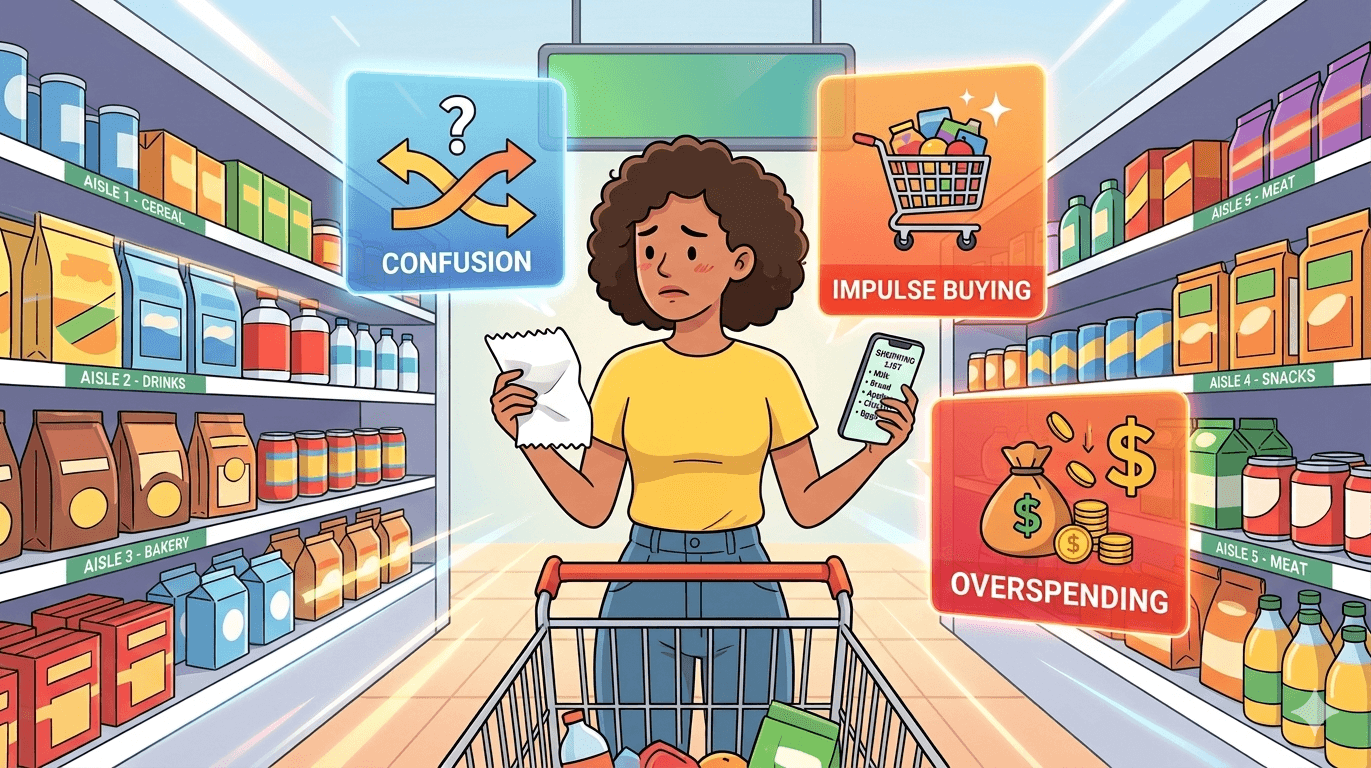
Common Grocery Shopping Mistakes That Cost You Time and Money
Small grocery shopping mistakes can quietly waste time, money, and energy. These are some of the most common habits that make grocery trips harder than they need to be.
Read article