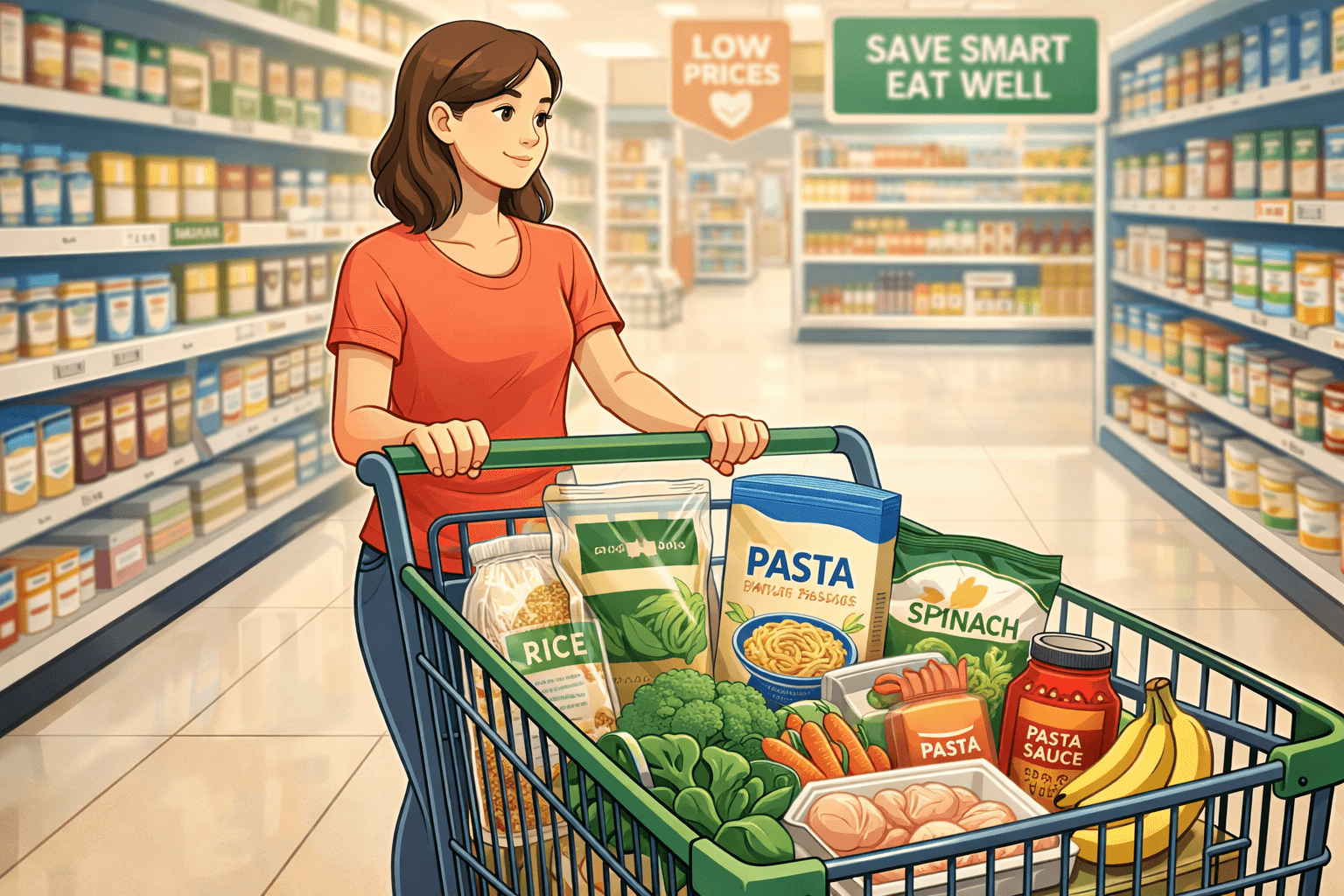
How to Grocery Shop Effectively Without Spending More or Buying Too Much
Effective grocery shopping is less about perfect planning and more about a few simple habits that keep your cart aligned with your real week. These tips help you avoid overbuying, overspending, and feeling overwhelmed in the store.

Grocery Savvy Team
The Grocery Savvy team shares practical grocery shopping tips and insights to help everyday food decisions feel clearer and easier.
Published March 30, 2026 • 5 min read
If grocery shopping often feels like you leave the store with more than you planned, you are not alone.
Many people walk in for a short list and walk out with extra snacks, duplicate ingredients, or foods that looked useful in the moment but never really fit the week ahead.
That does not usually happen because people are careless. It happens because grocery stores ask you to make a lot of decisions quickly, in an environment built to distract you.
Effective grocery shopping is not about strict rules or perfect meal prep. It is about building a few simple habits that help you feel calmer, more intentional, and less likely to overbuy.
Start With a Quick Check at Home
One of the easiest ways to shop more effectively is to start before you leave the house.
Take a few minutes to check:
- the fridge
- the freezer
- the pantry
Notice what needs to be used soon and what you already have enough of.
Then think about the next few days. You do not need a full weekly meal plan. Even a rough sense of a few dinners, breakfasts, and snacks is enough to give your trip direction.
That small habit does a lot of work because it helps prevent duplicate purchases and makes the store feel less random once you get there.
Think in Meals, Not Random Items
One of the easiest ways to buy too much food is to shop for disconnected items instead of meals.
Instead of asking, “Does this look useful?” it helps to ask, “What will this become once I get home?”
If you buy chicken, what else turns it into a meal?
If you buy bread, how will you use it over the next few days?
If you buy produce, what meal helps you use it before it goes bad?
This mindset makes your cart feel much more intentional and usually cuts down on the food that never gets used.
Use the Whole Store With Purpose
You will often hear advice to stick only to the outside of the store.
That can be helpful in some cases, but it is not the full story.
The middle aisles hold a lot of practical foods:
- rice
- pasta
- beans
- canned foods
- spices
The goal is not to avoid parts of the store. It is to move through them with purpose. If something is not on your list and you cannot see how it fits your week, that is usually your cue to keep moving.
Slow Down When You Feel Rushed
Grocery stores are built to encourage quick decisions.
Bright displays, promotions, and “limited-time” deals make it easy to grab things without much thought.
If you notice yourself getting pulled off track, pause for a second.
Look back at your list. Ask:
- do I already have something similar?
- do I know when I will use this?
- does this actually fit what I came for?
Buying less but buying more intentionally is often what makes grocery shopping feel more effective.
Shop for the Life You Actually Live
This is one of the most useful mindset shifts you can make.
Shop for your real schedule, your real energy, and your real cooking habits.
That might mean:
- repeat meals
- frozen foods
- pre-cut vegetables
- simple convenience items you know you will actually use
There is nothing wrong with making shopping easier on yourself. Foods that fit your real routine are far more likely to get eaten than foods bought for an idealized version of the week.
Be More Intentional With Extra Items
The “just in case” additions are often what quietly push the total higher.
Before adding something extra, it helps to ask:
- what meal is this for?
- when will I use it?
- does it replace something, or is it only adding more?
You do not have to say no to everything. You just want the choice to be conscious.
Keep Your Routine Simple
You do not need to reinvent grocery shopping every week.
Buying familiar basics, shopping on a similar day, and keeping the process simple reduces decision fatigue.
That consistency is usually what makes grocery shopping feel easier over time. You learn what works, what gets wasted, and what is worth buying again.
If your list is one of the places things break down, How to Make a Grocery List That Actually Helps You Eat Better is a good companion read.
Use Tools That Reduce Mental Load
Many grocery problems start because people are trying to keep too much in their heads at once.
That is where simple support tools help:
- saved lists
- a few meal ideas
- reminders about what you actually need
Grocery Savvy is built to make those everyday decisions feel clearer. You can keep a grocery list, review foods more easily, and shop with a little more direction without turning the whole process into a project.
If you are new to the app, What is Grocery Savvy? is the best place to start.
Final Takeaway
Learning how to grocery shop more effectively does not happen all at once.
It usually comes from smaller habits like:
- checking what you already have
- thinking in meals
- slowing down before extra purchases
- shopping for your real week instead of an ideal one
If grocery shopping feels a little less stressful and a little more intentional than it used to, that is real progress.
Keep Reading
Related Articles
Common Grocery Shopping Mistakes That Cost You Time and Money
Small grocery shopping mistakes can quietly waste time, money, and energy. These are some of the most common habits that make grocery trips harder than they need to be.
Read article
How to Make a Grocery List That Actually Helps You Eat Better
A good grocery list is not about perfection. It is about reducing decision fatigue before you get to the store and making everyday food choices feel easier.
Read article