What “Heart-Healthy” Actually Means on Food Labels
“Heart-healthy” can sound clear on a package, but it usually points to a broader pattern rather than one perfect claim. This guide explains what to look for when you are comparing foods in the store.
Grocery Savvy Team
The Grocery Savvy team shares practical grocery shopping tips and insights to help everyday food decisions feel clearer and easier.
Published March 27, 2026 • 4 min read
Walk through a grocery store long enough and you will see some version of it:
- heart-healthy
- low cholesterol
- low sodium
- good for your heart
It sounds specific. It sounds like something you should be able to trust quickly.
But once you stop and think about it, it is not always obvious what it actually means in practice. Is it one nutrient? One ingredient? One label claim?
For most shoppers, "heart-healthy" becomes something you recognize without fully knowing how to use it. That is where the confusion starts.
What People Usually Mean by "Heart-Healthy"
When people talk about heart-healthy foods, they are usually thinking in broader patterns, not exact definitions.
Things like:
- lower sodium
- lower saturated fat
- more fiber in some cases
- less reliance on heavily processed foods
That is why "heart-healthy" works better as a general lens than a perfect label. It helps point you in a direction, but it does not make the whole decision for you.
The Main Signals Worth Comparing
If you are trying to make clearer grocery decisions, there are a few signals that tend to matter more often than the rest.
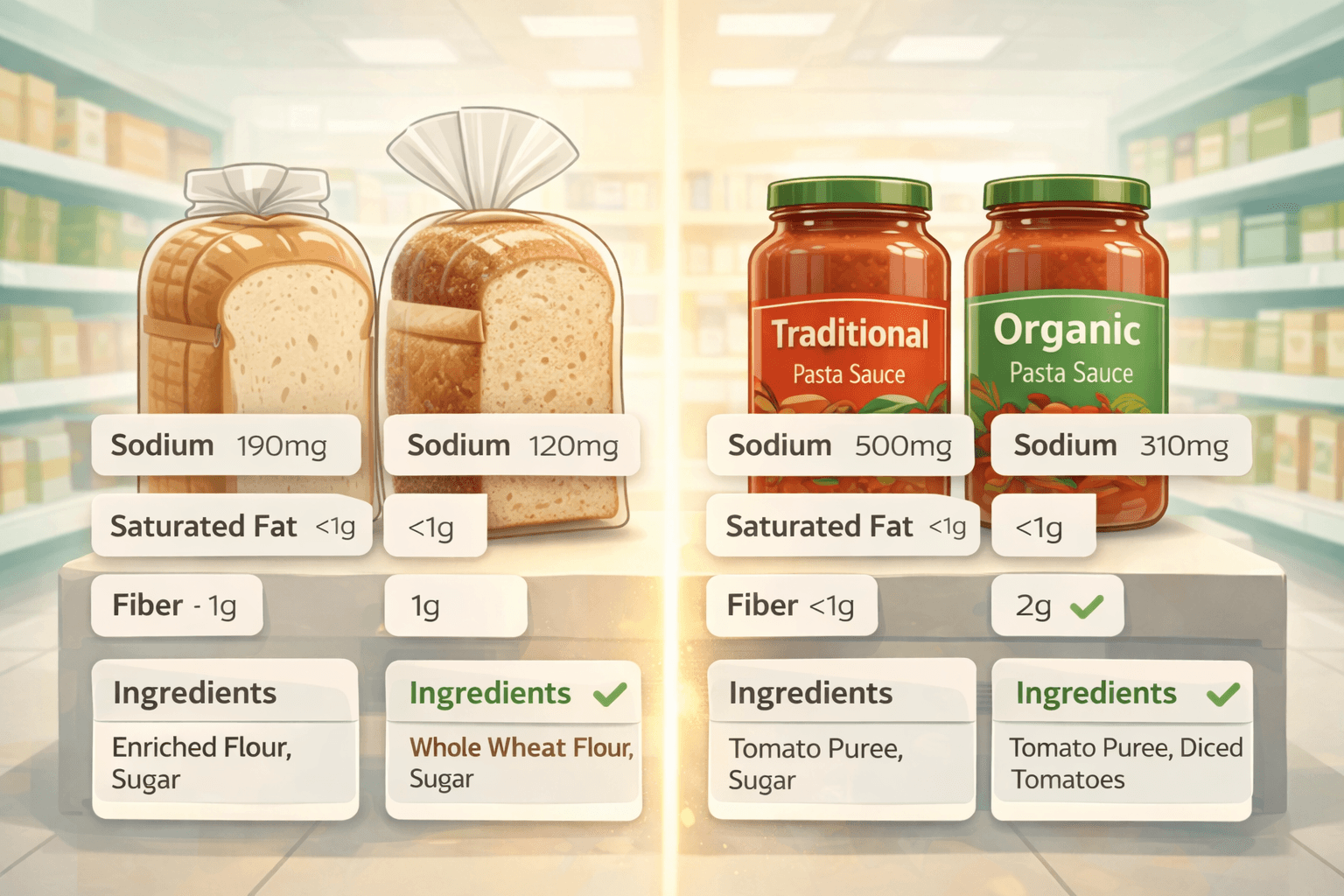
Sodium
Sodium is one of the first things many shoppers check, especially when comparing soups, breads, sauces, frozen meals, and snacks.
If you want the bigger-picture version of that topic, what a low sodium diet actually means is a useful follow-up.
Saturated Fat
Saturated fat is another number that often shows up in heart-health conversations. It is not the only thing that matters, but it is one more piece of context when you are comparing similar foods.
Fiber
Foods with more fiber often come with more whole, plant-based ingredients and a little more nutritional substance overall.
Ingredients
What the product is actually made from still matters. Two products can sound similar on the front of the package and look very different once you check the first few ingredients.
That is one reason reading food labels matters so much here.
Cholesterol
Cholesterol gets a lot of attention on packaging, but it is still only one part of the picture. A food can be low in cholesterol and still not be the clearest fit once you look at everything else together.
Why One Claim Is Not Enough
This is one of the easiest places to get tripped up.
A package might say:
- low cholesterol
- low fat
- organic
- heart-healthy
And it is easy to assume that means the product is automatically a better option.
But those claims usually highlight one angle of the food, not the whole picture.
For example:
- a product can be low cholesterol but still high in sodium
- something labeled low fat can still be highly processed
- an organic product is not automatically lower in sodium or saturated fat
That is why broad labels and dietary tags are most useful as guidance, not final answers.
What This Looks Like in Real Grocery Shopping
This gets much easier to understand when you picture real products in front of you.
Bread
Two breads may both sound like better choices on the front of the bag. But one may have more fiber, simpler ingredients, or lower sodium once you compare them directly.
Soups
One soup may highlight low fat while another is lower in sodium. Without comparing both, it is hard to know which one better fits what you care about.
Sauces
Sauces are one of the easiest places for sodium to build up quietly, even when the packaging is trying to draw your attention somewhere else.
Snacks
A snack can be marketed as a smarter option and still be more processed or less balanced than it first appears.
Most "heart-healthy" decisions are not absolute. They are comparisons between similar options.
How To Make the Comparison Easier
You do not need to analyze every detail, but a few small habits help:
- compare foods in the same category
- check the serving size before trusting the numbers
- look at the first few ingredients
- focus on making a clearer comparison, not finding a perfect food
If serving sizes are part of what makes labels feel inconsistent, Serving Size vs 100g explains why that happens.
Final Takeaway
"Heart-healthy" is not one single definition, and it is not something you can decide from one claim on the front of a package.
It is a broader way of thinking about food:
- looking at more than one factor
- comparing similar options
- understanding what you are actually choosing
You do not need perfect grocery decisions. You just need enough context to make the next one a little clearer.
Keep Reading
Related Articles
Low-Cholesterol Foods, Explained: What to Look For at the Grocery Store
Cholesterol on a food label can be hard to interpret in the aisle. This guide explains where cholesterol tends to show up, what low-cholesterol means, and how to shop with more clarity.
Read article
Low-Sodium Shopping, Made Simple: How to Find Better Options Without Overthinking It
Lower-sodium shopping gets easier when you know where sodium tends to hide, what labels actually mean, and when a quick comparison is enough.
Read article