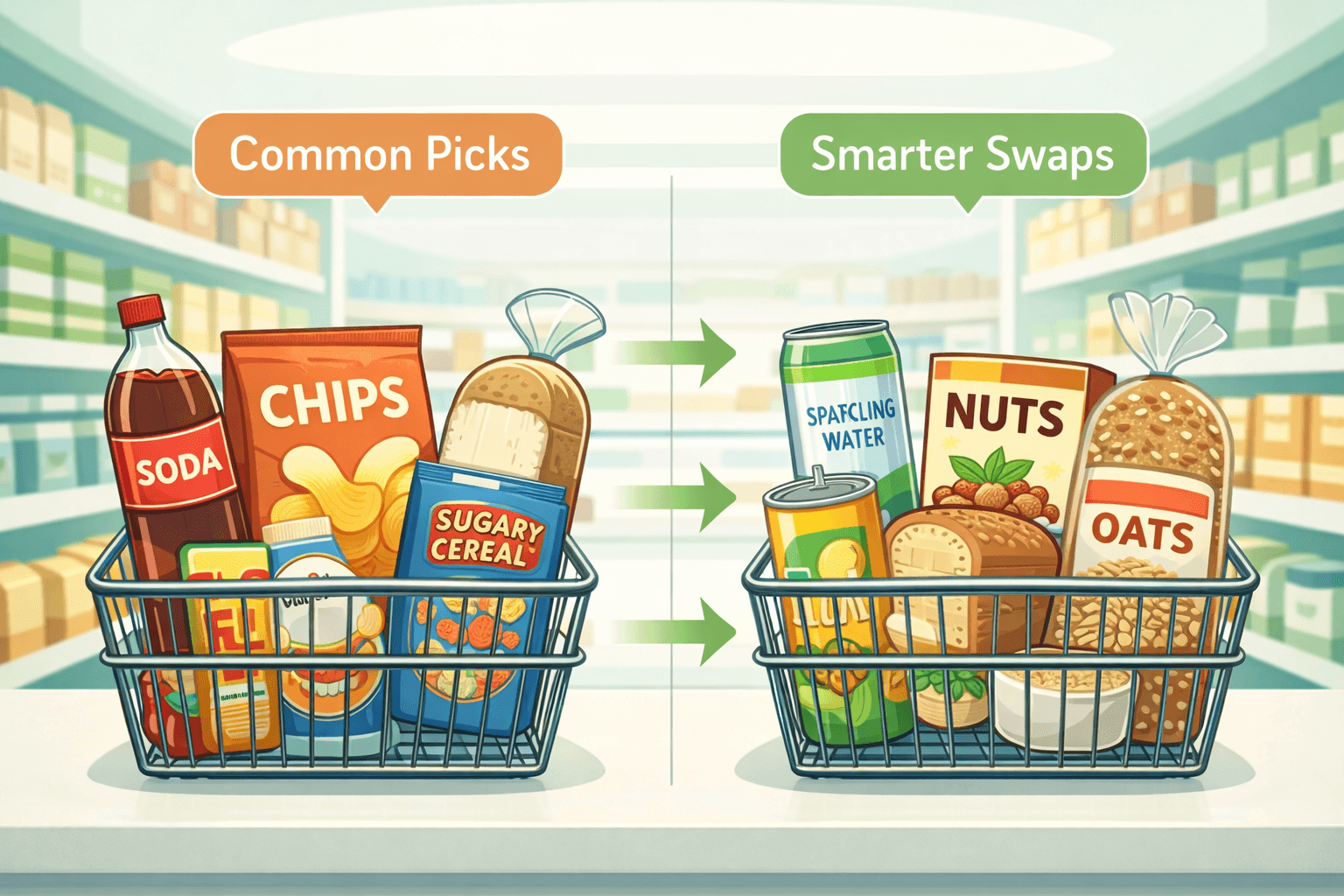
Healthy Eating Made Simple: 10 Easy Swaps for a Healthier Grocery List
Healthier grocery shopping does not have to start with a full reset. These simple swaps can make everyday meals feel more balanced without adding a lot of friction.

Grocery Savvy Team
The Grocery Savvy team shares practical grocery shopping tips and insights to help everyday food decisions feel clearer and easier.
Published March 2, 2025 • 3 min read
Eating a little better does not have to mean changing everything at once.
Some of the most useful grocery improvements are simple swaps that make your cart a little more supportive of the way you want to eat. Not perfect. Just better aligned.
Here are ten practical examples.
1. Whole Grain Bread Instead of White Bread
Whole grain bread often gives you more fiber and more staying power than refined white bread.
When you compare options, it helps to check the ingredient list and look for whole grains closer to the top.
2. Plain Oats Instead of Sugary Cereal
Many cereals sound healthy but come with a lot of added sugar.
Plain oats give you a more flexible base, and you can add flavor with fruit, cinnamon, nuts, or yogurt.
If you want more context on why swaps like this help, what dietary fiber is and how macronutrients work make this part much easier to understand.
3. Sparkling Water Instead of Soda
If soda is a regular habit, sparkling water or unsweetened tea can be a simple shift that cuts down on added sugar without feeling like a huge change.
4. Brown Rice or Quinoa Instead of White Rice
This is not about banning white rice. It is just one example of how swapping in grains with a little more fiber can help some meals feel more balanced.
5. Nuts and Seeds Instead of Processed Snacks
Processed snacks can still fit into real life, but nuts and seeds tend to offer a little more substance when you want something quick.
Unsalted versions are often worth checking first if sodium matters to you.
6. Plain Greek Yogurt Instead of Flavored Yogurt
Flavored yogurt can carry more added sugar than people expect.
Plain yogurt gives you a more neutral starting point, and you can sweeten it yourself with fruit or a little honey if you want.
7. Simpler Proteins Instead of Heavily Processed Deli Meats
Fresh or less processed proteins like chicken, beans, tofu, or eggs can make meals easier to build without leaning so much on sodium and preservatives.
8. Olive Oil or Avocado Instead of Butter in Some Places
This is one of those "sometimes" swaps that can help depending on the meal. It is not about cutting butter out completely. It is about having more than one option.
9. Simple Dressings Instead of Highly Processed Bottled Options
Some bottled dressings are fine. But this category is one where sugar, sodium, and additives can pile up quickly.
Even a basic combination like olive oil, vinegar, mustard, and pepper can go a long way.
10. Dark Chocolate or Fruit Instead of Candy
If you like having something sweet in the house, a more intentional option can help without making the pantry feel overly restrictive.
What Actually Makes These Swaps Useful
The point of a grocery swap is not perfection. It is support.
A swap is useful when it:
- fits your real habits
- does not create more stress than it solves
- helps your cart align with your goals a little more often
That is also why label reading matters. If you want to get better at comparing products instead of relying on marketing language, How to Read Nutrition Labels Like a Pro is a strong next read.
Final Takeaway
Healthy eating usually becomes more manageable when you stop trying to change everything and start choosing a few better defaults.
Small swaps are not flashy, but they are often what make better grocery habits actually stick.
If you want a broader starting point for that approach, The Beginner's Guide to Grocery Shopping for a Healthier You is a good next read.
Keep Reading
Related Articles

The Beginner's Guide to Grocery Shopping for a Healthier You
If healthier grocery shopping still feels confusing, this guide breaks the process into a few practical habits that make the store easier to navigate.
Read article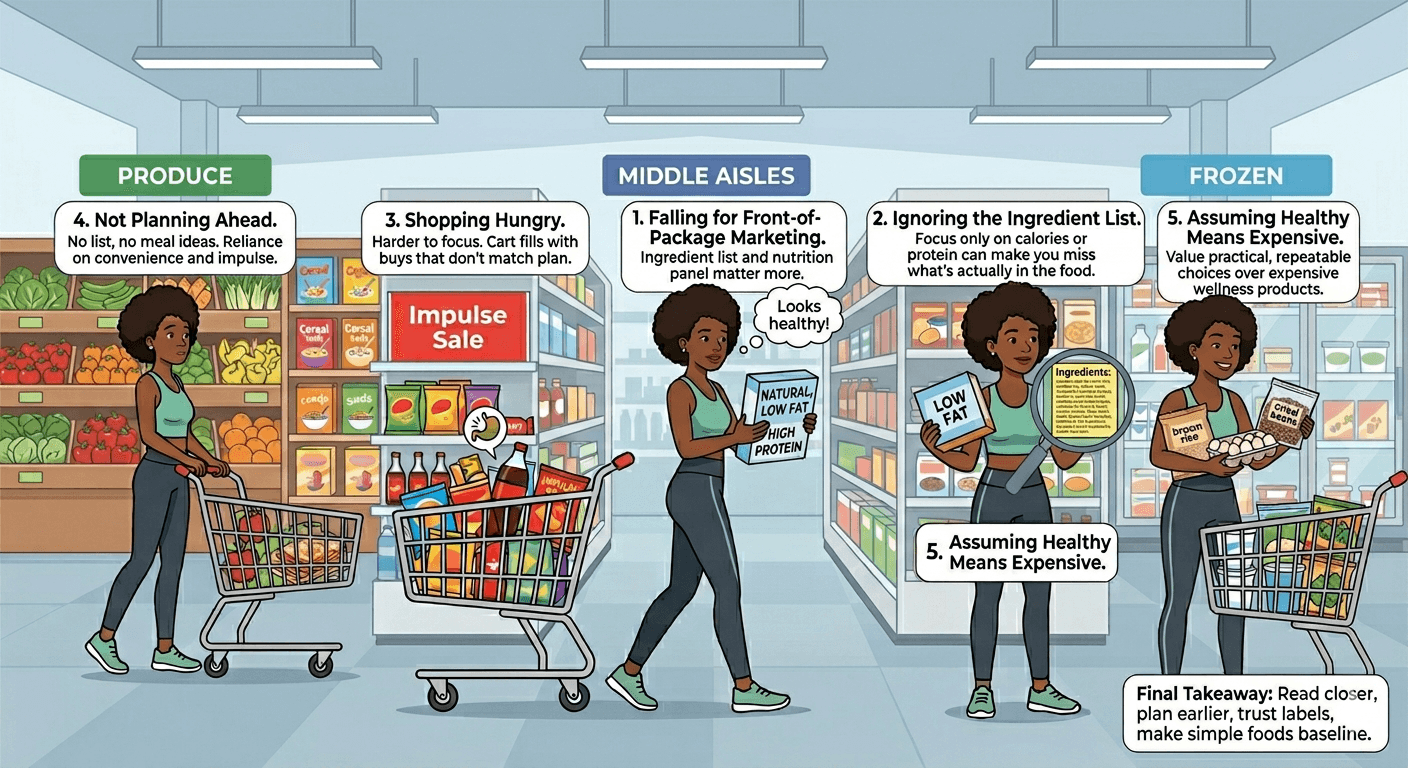
5 Common Grocery Store Mistakes That Are Ruining Your Healthy Eating Goals
Healthy eating often breaks down before you even leave the store. These common grocery mistakes make better choices harder than they need to be.
Read article