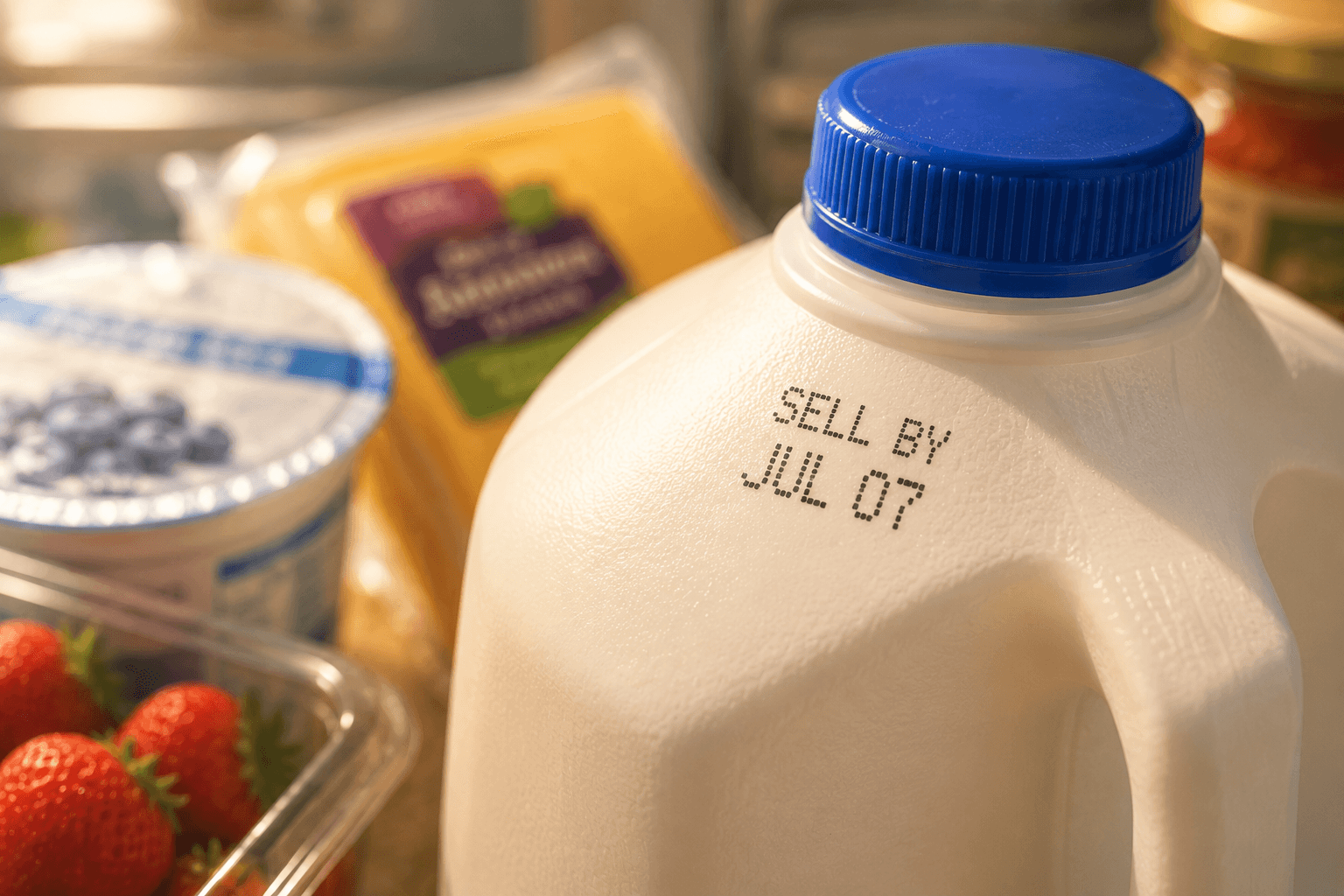
California Banned “Sell By” Dates: What Grocery Shoppers Should Know
California’s new food date label law is a good reminder that “sell by,” “best if used by,” and “use by” do not all mean the same thing. Here is how to read date labels without wasting food or ignoring safety.
Grocery Savvy Team
The Grocery Savvy team shares practical grocery shopping tips and insights to help everyday food decisions feel clearer and easier.
Published July 2, 2026 • 6 min read
If you have ever stared at a carton of milk, a container of yogurt, or a package of deli food and wondered whether the date means “eat it,” “sell it,” or “throw it away,” you are not alone.
Food date labels have been confusing for a long time.
California is now trying to make them clearer. A new state law that took effect on July 1, 2026 limits the date-label language that can appear on many foods sold in California. The big headline is that consumer-facing “sell by” labels are being removed.
That matters because “sell by” was never really written for you.
It was mainly a stock-rotation cue for stores. But shoppers often read it like an expiration date, which can lead to food getting tossed before it needs to be.
What Changed in California
California’s Assembly Bill 660 says that, starting July 1, 2026, food manufacturers, processors, or retailers selling certain foods in the state must use more standardized language when they choose or are required to show a quality or safety date.
The official California bill text lists the core terms this way:
- BEST if Used by or BEST if Used or Frozen by for quality dates
- USE by or USE by or Freeze by for safety dates
The law also says products manufactured on or after July 1, 2026, cannot use a consumer-facing label with the phrase “sell by.” There are exceptions, including infant formula, eggs, pasteurized in-shell eggs, beer, and other malt beverages.
One practical detail: you may still see older labels for a while. As the Associated Press reported, stores may sell through products that were already labeled before the new system fully shows up on shelves.
What “Best if Used By” Means
“Best if Used By” is about quality.
That usually means the date is pointing to when the food is expected to be at its best flavor, texture, or overall quality. It does not automatically mean the food becomes unsafe the next day.
This is especially important for foods where quality changes before safety becomes the main concern.
For example, a food might become:
- less crisp
- less flavorful
- drier
- softer
- less fresh-tasting
That can still matter. Nobody wants stale food. But quality is different from safety.
The USDA’s food product dating guidance has long encouraged “Best if Used By” language because it is easier for consumers to understand.
What “Use By” Means
“Use By” is more serious.
Under California’s new framework, “Use By” is the phrase tied to safety dates. If a food has a “Use By” date, that label deserves more attention than a quality-focused “Best if Used By” date.
That does not mean you should ignore smell, texture, temperature, storage, or package condition. Food safety is not only about one printed date.
But as a shopper, the basic distinction is useful:
- Best if Used By = quality
- Use By = safety
That difference is the whole point of the new label system.
Why “Sell By” Was So Confusing
“Sell by” sounds like it should matter to the person buying the food.
But in many cases, it was meant for the store.
It helped retailers know how long to display a product, when to rotate stock, or when to move items off the shelf. That does not necessarily tell you whether the food is unsafe at home.
The problem is that most people do not read “sell by” that way. They read it like an expiration date.
That confusion can lead to two bad outcomes:
- throwing away food that may still be usable
- ignoring actual safety clues because all date labels start to feel the same
Clearer wording helps shoppers make better decisions faster.
Date Labels Are Helpful, But They Are Not the Whole Decision
Date labels matter, but they are not magic.
A date label cannot know whether your milk sat in a hot car, whether your refrigerator is cold enough, whether a package was opened days ago, or whether a food shows signs of spoilage.
So when you are deciding what to keep, use the label alongside common sense:
- Was it stored at the right temperature?
- Is the package damaged, swollen, leaking, or opened?
- Does the food smell, look, or feel off?
- Has it been handled safely since you bought it?
- Is it a food where safety risk is higher, like meat, seafood, prepared foods, or dairy?
If something seems unsafe, do not try to talk yourself into using it just because the date looks okay.
If the label is a quality date and the food has been stored properly, you may have more room to use your judgment.
How This Can Help Reduce Food Waste
Food waste is often not about one big mistake.
It is usually small confusion repeated over and over:
- a date label gets misunderstood
- leftovers get forgotten
- fresh produce has no plan
- freezer options are ignored
- shoppers buy for an ideal week instead of a real one
That is why date-label clarity matters. If people understand the difference between quality and safety, they may be less likely to throw away food simply because a package date passed.
But labels are only one piece of the food-waste puzzle.
If this is a recurring issue in your kitchen, Why “Healthy” Grocery Hauls Still Lead to Food Waste goes deeper on how shelf life, planning, and real-life routines affect what actually gets eaten.
What to Do While Shopping
Here is the simple version.
When you see a date label, ask what kind of date it is.
If it says Best if Used By, think quality. Is this something you want at peak freshness, or will it still work in a recipe if it is slightly past its best window?
If it says Use By, treat it more carefully. Plan to use it by that date, especially for foods where safety risk matters more.
If you still see Sell By, remember that it was likely intended for store rotation, not as a direct instruction to throw the food away at home.
And before you buy, ask one more question:
Will I realistically use this in time?
That question prevents more waste than most people realize.
Bottom Line
California’s “sell by” date change is not just a packaging update. It is a reminder that food labels need plain language.
For shoppers, the most useful distinction is simple:
- Best if Used By helps you think about quality.
- Use By helps you think about safety.
- Sell By was mostly a store-facing cue, not a home expiration rule.
Grocery shopping gets easier when labels say what they mean. Until every package is that clear, the best approach is to read the date, check the food, and connect what you buy to the week you actually have.
Keep Reading
Related Articles
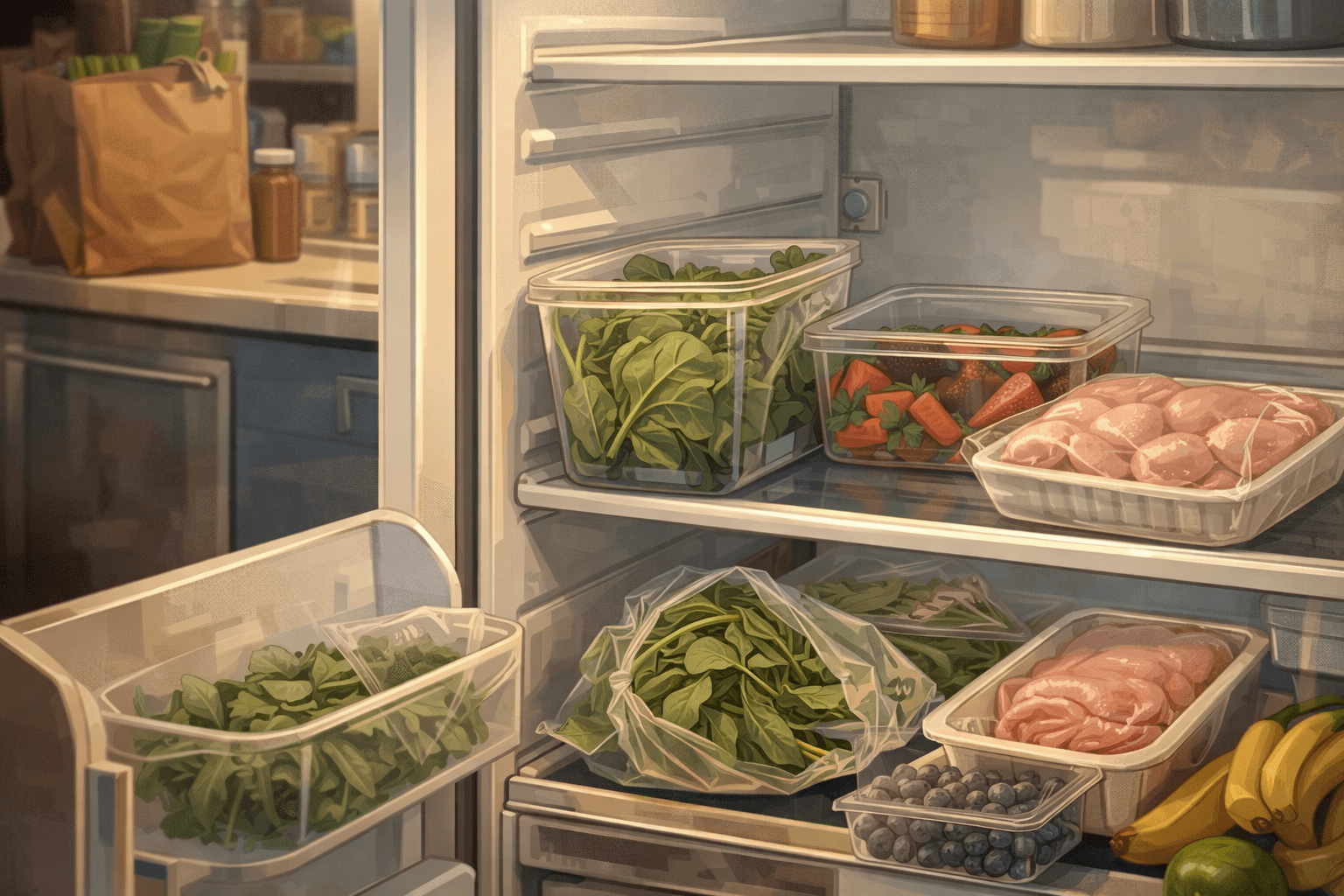
Why “Healthy” Grocery Hauls Still Lead to Food Waste
A cart full of good intentions does not always turn into meals you actually eat. Food waste usually happens when shelf life, meal plans, and shopping habits stop lining up with real life.
Read article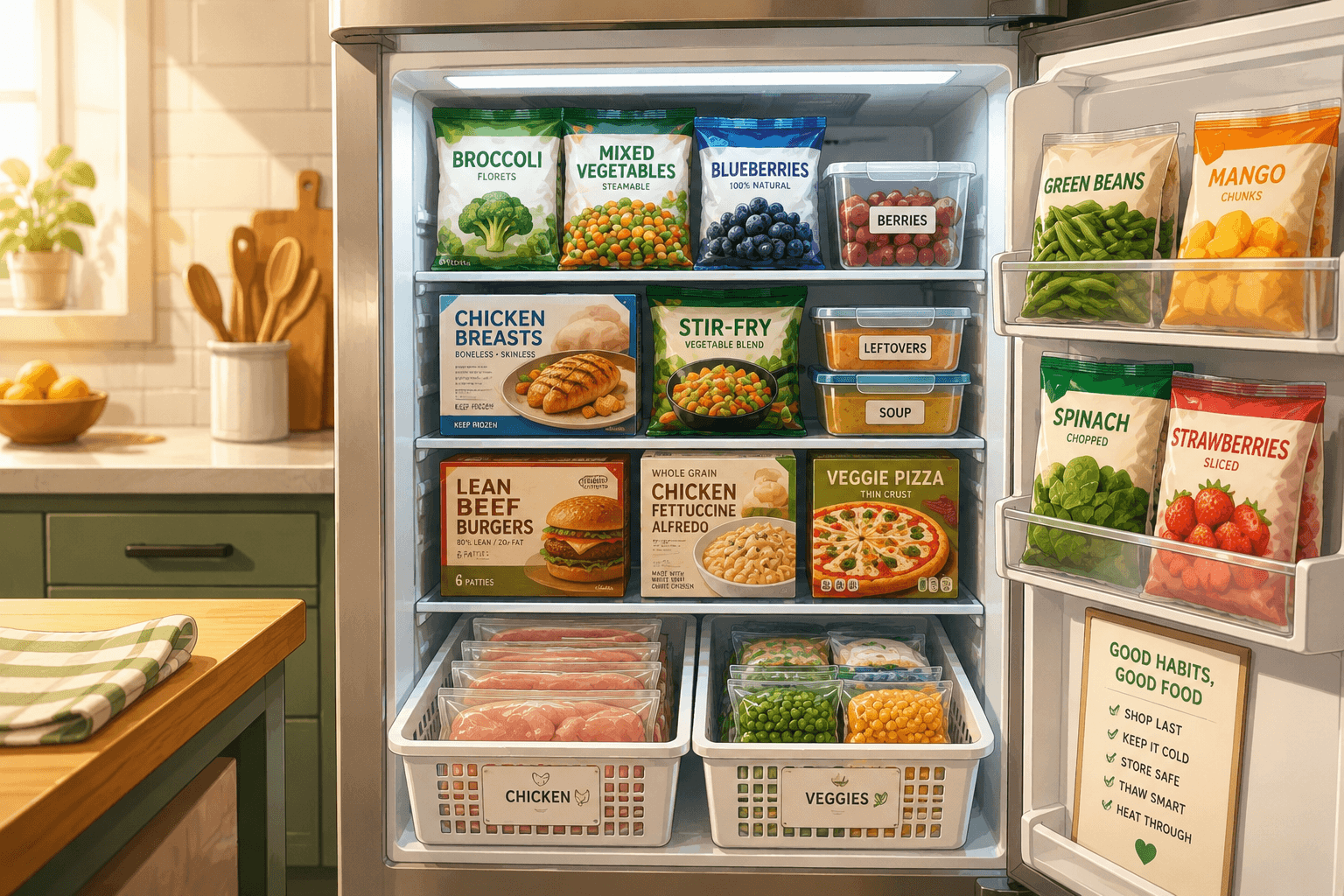
Frozen Food Safety Basics: How to Shop, Store, and Heat Freezer Foods
Frozen foods can make grocery shopping easier, but they still need simple safety habits. Here is how to shop, store, thaw, and heat freezer foods with more confidence.
Read article