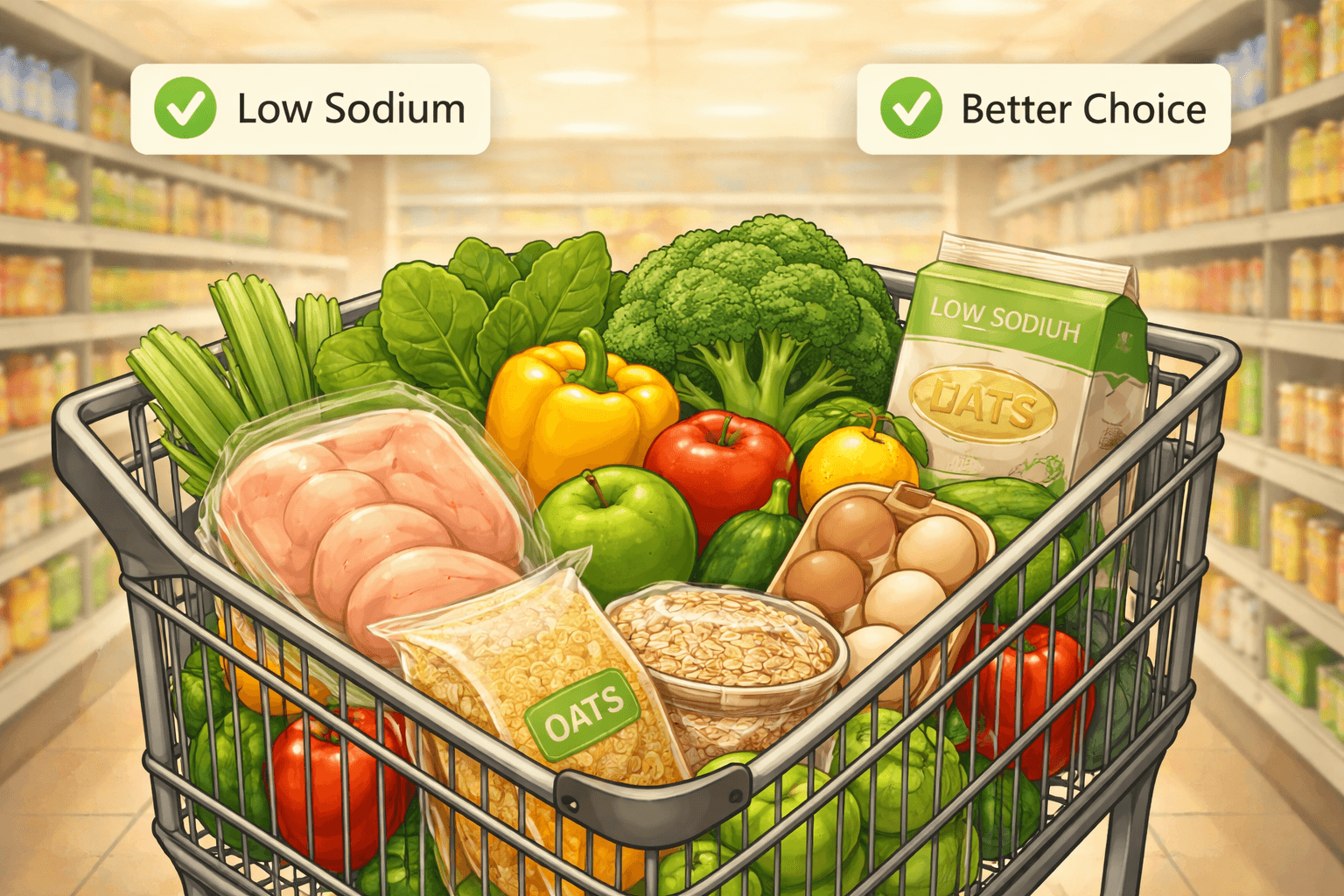
The Best Low-Sodium Foods for Your Grocery List
If you are trying to build a lower-sodium grocery list, some foods make the process much easier than others. This guide covers practical categories to start with.
Grocery Savvy Team
The Grocery Savvy team shares practical grocery shopping tips and insights to help everyday food decisions feel clearer and easier.
Published February 21, 2025 • 3 min read
Lowering sodium does not have to mean eating bland food or filling your cart with specialty products.
In many cases, it just means knowing which grocery categories naturally make low-sodium shopping easier and which ones tend to hide more sodium than expected.
This guide focuses on practical, everyday foods you can build around.
Start With Fresh Produce
Fresh fruits and vegetables are one of the easiest places to start because they are naturally low in sodium and easy to work into everyday meals.
Useful options include:
- apples
- bananas
- berries
- oranges
- grapes
- leafy greens
- carrots
- broccoli
- bell peppers
- zucchini
Fresh is great, but plain frozen produce can be a solid option too.
Choose Simple Protein Sources
Processed meats tend to be one of the quickest ways sodium sneaks into the cart.
Lower-sodium options are usually simpler, less processed proteins like:
- chicken breast
- turkey
- fresh fish
- eggs
- tofu
- dried beans and lentils
The less seasoning and processing already built in, the more control you usually have later.
Keep Whole Grains and Staples Around
Staples make lower-sodium shopping easier because they help you build meals without needing heavily processed foods all the time.
Good examples include:
- brown rice
- quinoa
- oatmeal
- barley
- whole wheat pasta
Bread and crackers can still fit, but they are often worth comparing label to label because sodium can vary a lot.
Be Selective With Dairy and Alternatives
Some dairy foods are much higher in sodium than others.
Often easier choices include:
- plain yogurt
- unsweetened milk alternatives
- lower-sodium cottage cheese
- fresh mozzarella or ricotta in moderate amounts
This is one of those categories where comparison shopping helps a lot.
Use Nuts, Seeds, and Healthy Fats Carefully
Nuts, seeds, avocado, olive oil, and similar foods can be useful parts of a lower-sodium grocery routine, but it still helps to check the package.
The key is to look for:
- unsalted versions
- simple ingredient lists
- fewer unnecessary add-ons
Flavor Still Matters
Lower sodium does not mean flavor has to disappear.
Ingredients like these can do a lot of work:
- garlic
- onion
- citrus
- vinegar
- herbs
- pepper
- paprika
- cumin
They help you build meals that still taste satisfying without leaning so heavily on salt.
A Smarter Way To Build the List
You do not need to redesign your entire way of eating in one trip.
A simpler approach is to build your list around:
- a few naturally lower-sodium staples
- one or two better packaged-food swaps
- ingredients you know you will actually use
If you want the broader label-reading side of this, Low-Sodium Shopping, Made Simple pairs well with this article.
If you want the more foundational version of the topic, What Is a Low Sodium Diet and Who Needs One? gives you the bigger-picture context behind these food choices.
Final Takeaway
The best low-sodium grocery list is usually not built from special products. It is built from more whole ingredients, a few smarter comparisons, and foods you can use flexibly throughout the week.
That is often enough to make lower-sodium shopping feel much more manageable.
Keep Reading
Related Articles
Low-Sodium Shopping, Made Simple: How to Find Better Options Without Overthinking It
Lower-sodium shopping gets easier when you know where sodium tends to hide, what labels actually mean, and when a quick comparison is enough.
Read article
The Best Grocery Shopping Tips for Saving Money
Saving money at the grocery store usually comes down to a few repeatable habits. These tips focus on the decisions that cut waste, curb impulse spending, and make your list work harder.
Read article