Grocery Shopping Tips for College Students (Simple, Affordable, and Realistic)
College grocery shopping does not need to be chaotic or expensive. A few practical habits can make food shopping feel more manageable, more affordable, and easier to keep up with during a busy week.

Grocery Savvy Team
The Grocery Savvy team shares practical grocery shopping tips and insights to help everyday food decisions feel clearer and easier.
Published March 30, 2026 • 4 min read
Grocery shopping as a college student can feel harder than it should.
Between classes, assignments, work, and trying to have some kind of social life, it is easy to fall into the same patterns:
- grabbing fast food because it is quick
- relying on convenience meals
- spending more than you meant to
- buying food that never really turns into a meal
The good news is that student grocery shopping does not need to be perfect to get better.
A few simple habits can make it feel more affordable, more manageable, and much less stressful.
1. Start With a Simple Meal Plan
You do not need a full weekly system to make this work.
Even a rough plan helps:
- a few breakfasts
- a few lunches
- a few dinners
- a couple of snacks you know you will actually eat
That is usually enough to build a useful shopping list and avoid the random-cart problem where nothing really goes together.
If this is the part that usually falls apart, How to Make a Grocery List That Actually Helps You Eat Better is a good next read.
2. Set a Budget Before You Shop
College grocery shopping usually works better when you decide your limit before you get to the store.
That does not have to mean a strict spreadsheet.
It can be as simple as knowing:
- what you usually spend
- what feels realistic this week
- where you tend to overspend when you are tired or distracted
Even a rough budget helps you make decisions with more confidence.
3. Focus on Affordable Staples
One of the easiest ways to make grocery shopping cheaper is to build around foods that are flexible and easy to reuse.
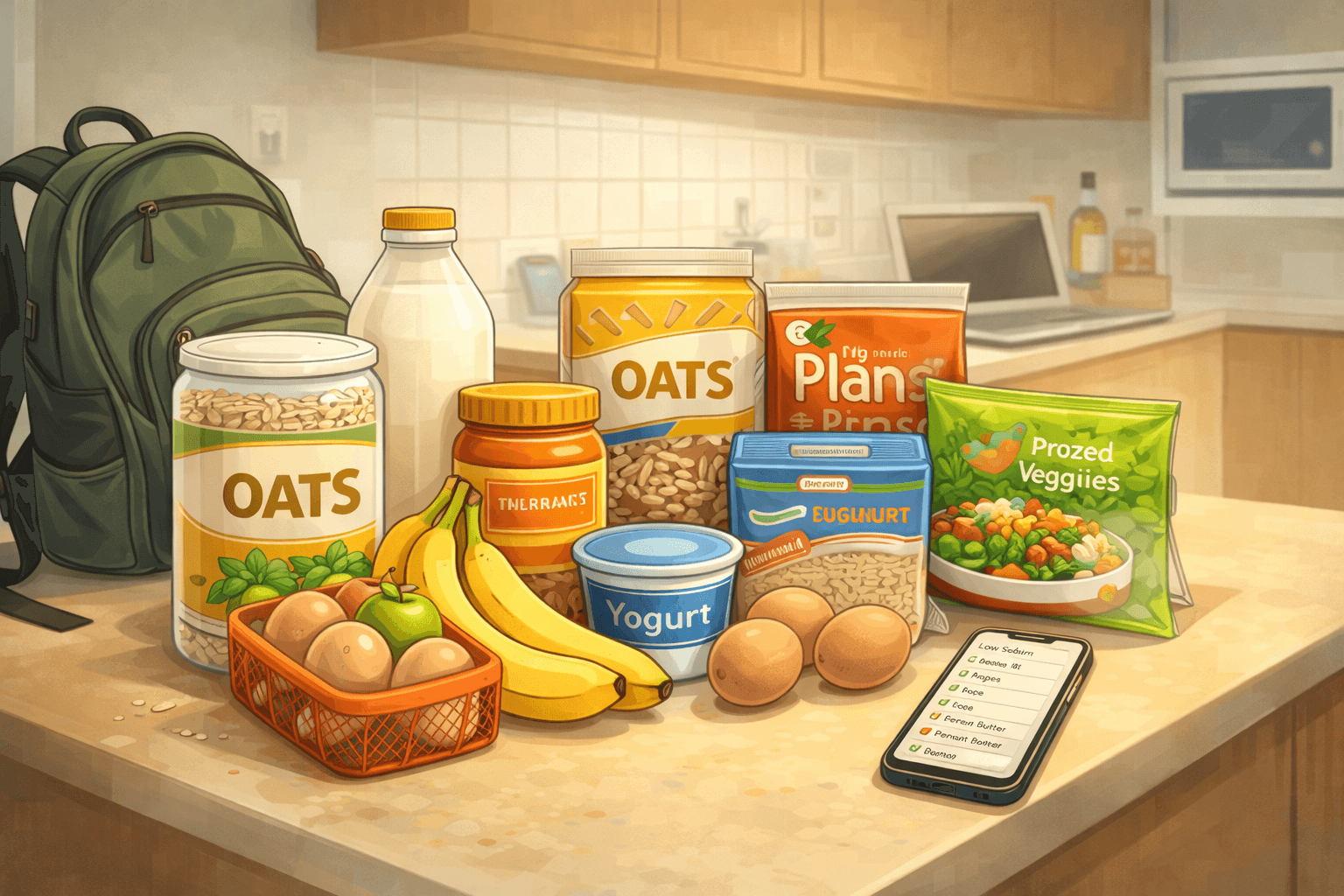
That often means basics like:
- rice
- pasta
- oats
- canned beans or lentils
- eggs
- frozen vegetables
- peanut butter
These foods are not flashy, but they make student grocery shopping much easier because they can stretch across multiple meals.
4. Buy in Bulk Only When It Actually Makes Sense
Bulk buying can help, but only when the food:
- costs less per unit
- lasts long enough
- fits what you will realistically use
Dry goods, canned foods, and frozen staples are usually safer bulk buys than highly perishable foods.
The goal is not to buy more. It is to buy smarter.
5. Cook Simple Meals You Will Actually Make
You do not need complicated recipes to eat better on a student schedule.
Simple meals are usually the most sustainable:
- pasta dishes
- stir-fries
- grain bowls
- soups
- eggs with a few sides
The easier a meal is to repeat, the more likely you are to use what you buy.
6. Keep Easy Snacks Around
When your schedule gets unpredictable, convenient snacks matter.
Having a few ready options around can make a big difference:
- fruit
- yogurt
- nuts
- carrots
- crackers you actually like
This is less about trying to snack perfectly and more about giving yourself something better than a vending machine fallback.
7. Be Careful With Sales and Discounts
A discount only saves money if it fits what you actually need.
It still helps to ask:
- was I already going to buy this?
- will I use it before it goes bad?
- is it actually a better value per unit?
If you want the bigger-picture version of this habit, The Best Grocery Shopping Tips for Saving Money goes deeper.
8. Use Tools To Stay Organized
Trying to remember everything in your head usually makes grocery shopping harder.
That is why simple tools help, whether it is a note on your phone, a saved meal idea, or a grocery app that keeps the list in one place.
Grocery Savvy is built for that kind of day-to-day clarity. You can keep a running grocery list, review foods more easily, and make shopping decisions with less guesswork while you are already in the aisle.
If you want the broader product overview, What is Grocery Savvy? is the best place to start.
9. Keep It Flexible
Student grocery shopping usually works better when you leave a little room for real life.
That means:
- keeping some favorite snacks
- allowing simple meals
- making room for the occasional convenience food
The goal is not perfection. It is building a grocery routine you can actually stick to.
10. Avoid the Most Common Student Pitfalls
A few habits tend to cause the most trouble:
- buying too many perishables at once
- forgetting what you already have
- letting leftovers go unused
- shopping without a plan when you are already stressed
Even small improvements here can save money quickly.
Final Takeaway
Grocery shopping as a college student does not need to be complicated.
Planning a few meals, sticking to a budget, buying flexible staples, and keeping your system simple can go a long way.
You do not need to become a perfect meal prep person overnight.
You just need a grocery routine that feels realistic enough to keep using week after week.
Keep Reading
Related Articles
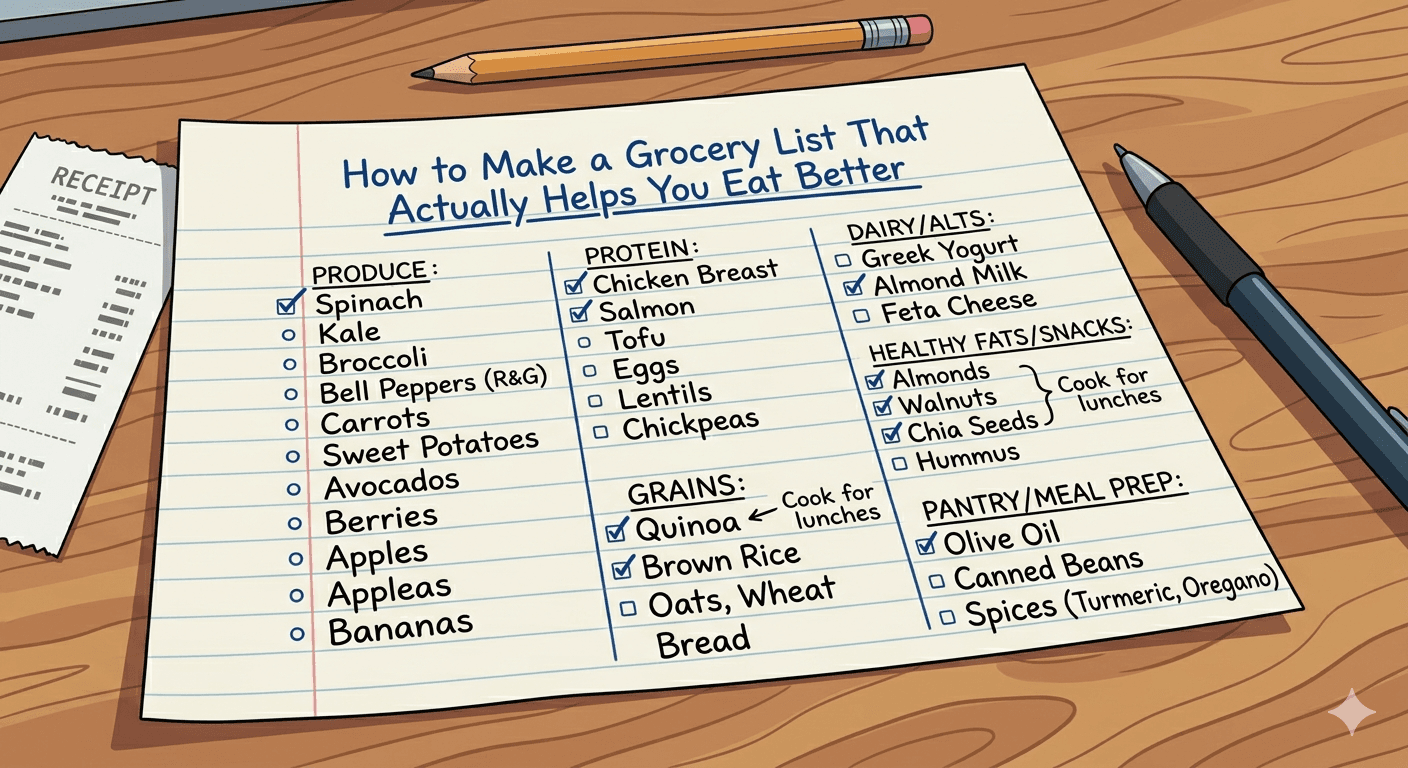
How to Make a Grocery List That Actually Helps You Eat Better
A good grocery list is not about perfection. It is about reducing decision fatigue before you get to the store and making everyday food choices feel easier.
Read article
The Best Grocery Shopping Tips for Saving Money
Saving money at the grocery store usually comes down to a few repeatable habits. These tips focus on the decisions that cut waste, curb impulse spending, and make your list work harder.
Read article